
Emily Carter
Editor
Sep 10, 2026
There is a distinct psychology to the way a woman gets dressed when she is dressing purely for herself. It is rarely about minimalism for minimalism’s sake, nor is it about mindless excess. Instead, it is an instinctual calculus—balancing utility with indulgence, restraint with eccentricity.
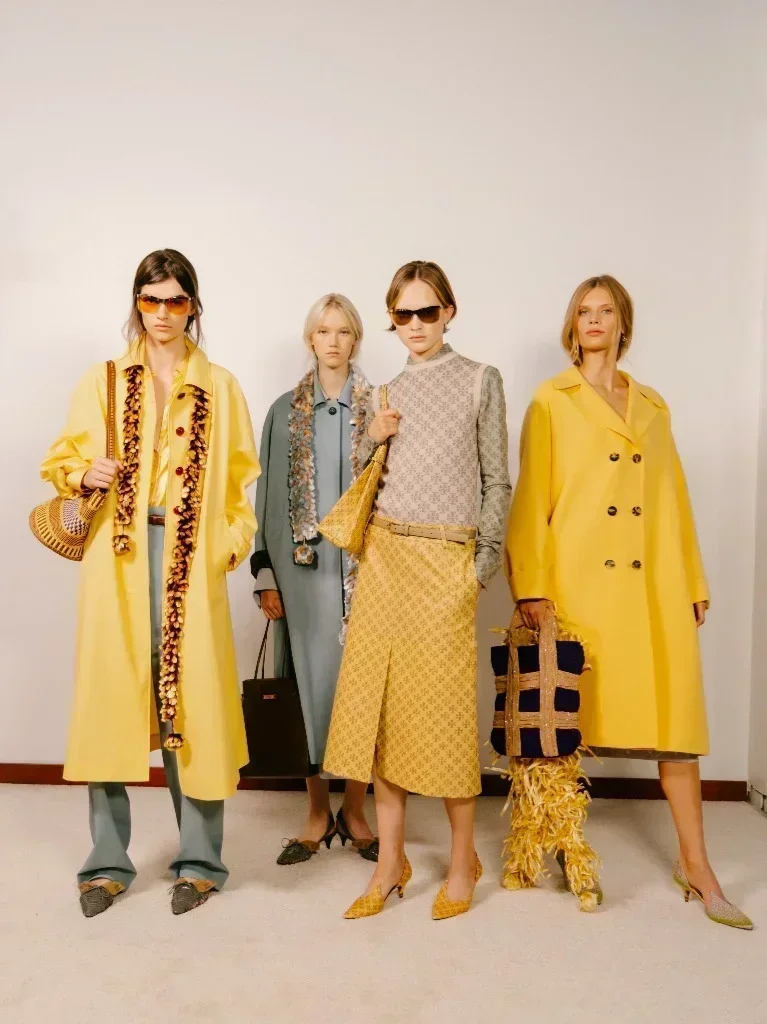
For Spring/Summer 2027 at New York Fashion Week , Tory Burch stepped directly into that headspace, offering a vibrant, textured antidote to years of muted discretion. Her thesis was unapologetic: “more is more,” delivered not as chaotic clutter, but through the discerning, expressive lens of a true collector.
“They want beauty, utility and humor — the joy of getting dressed.”
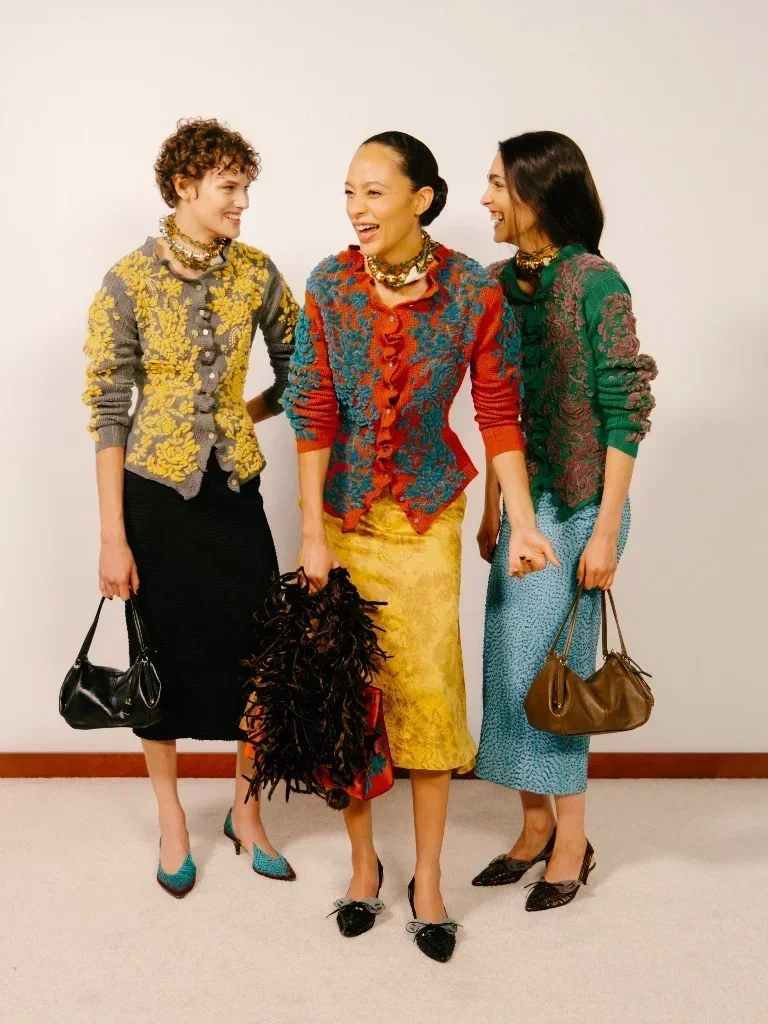
That sentence becomes the key to understanding the runway. Burch is not proposing excess as an aesthetic endpoint. She is exploring the pleasure of putting things together: a richly embroidered cardigan with a matching handbag, a sharply tailored coatdress punctuated by sleek pockets, a sculptural shoe wrapped around the foot, or an unexpected piece of jewelry that transforms the familiar into something curious.
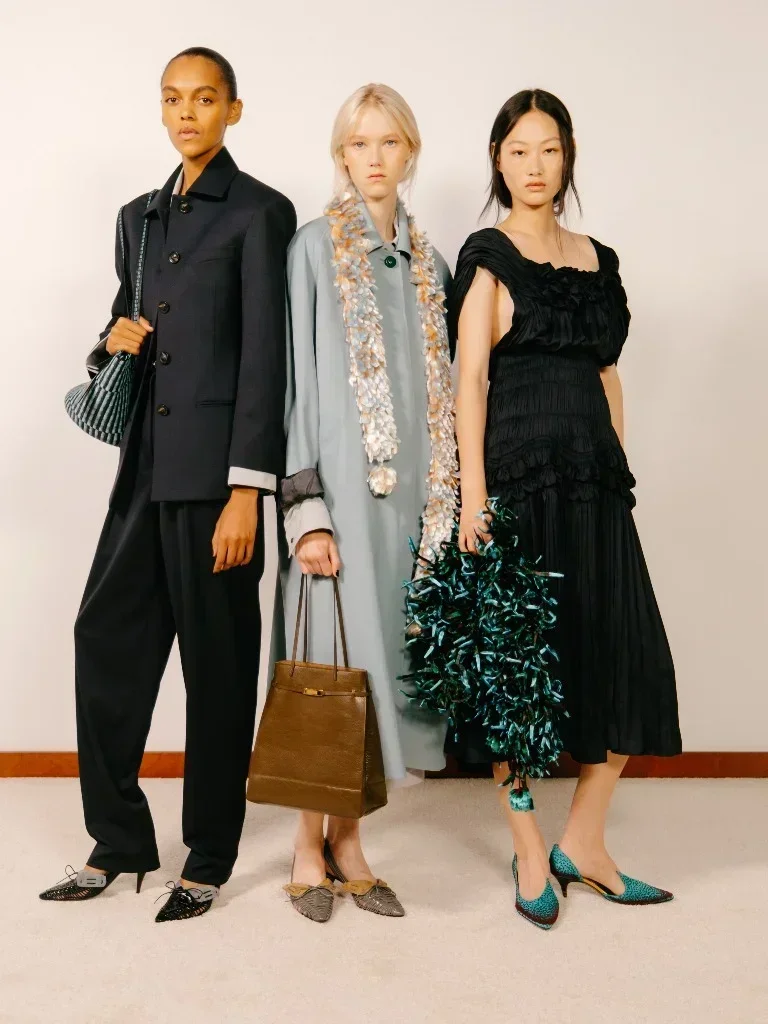
The collection is therefore less about abundance than discernment. Every embellishment, color and accessory feels chosen, accumulated and lived with. The woman wearing these clothes is not following a formula; she is building a visual vocabulary of her own.
More Is More
Embellishment and craft emerge as the most immediate expressions of Burch’s philosophy.
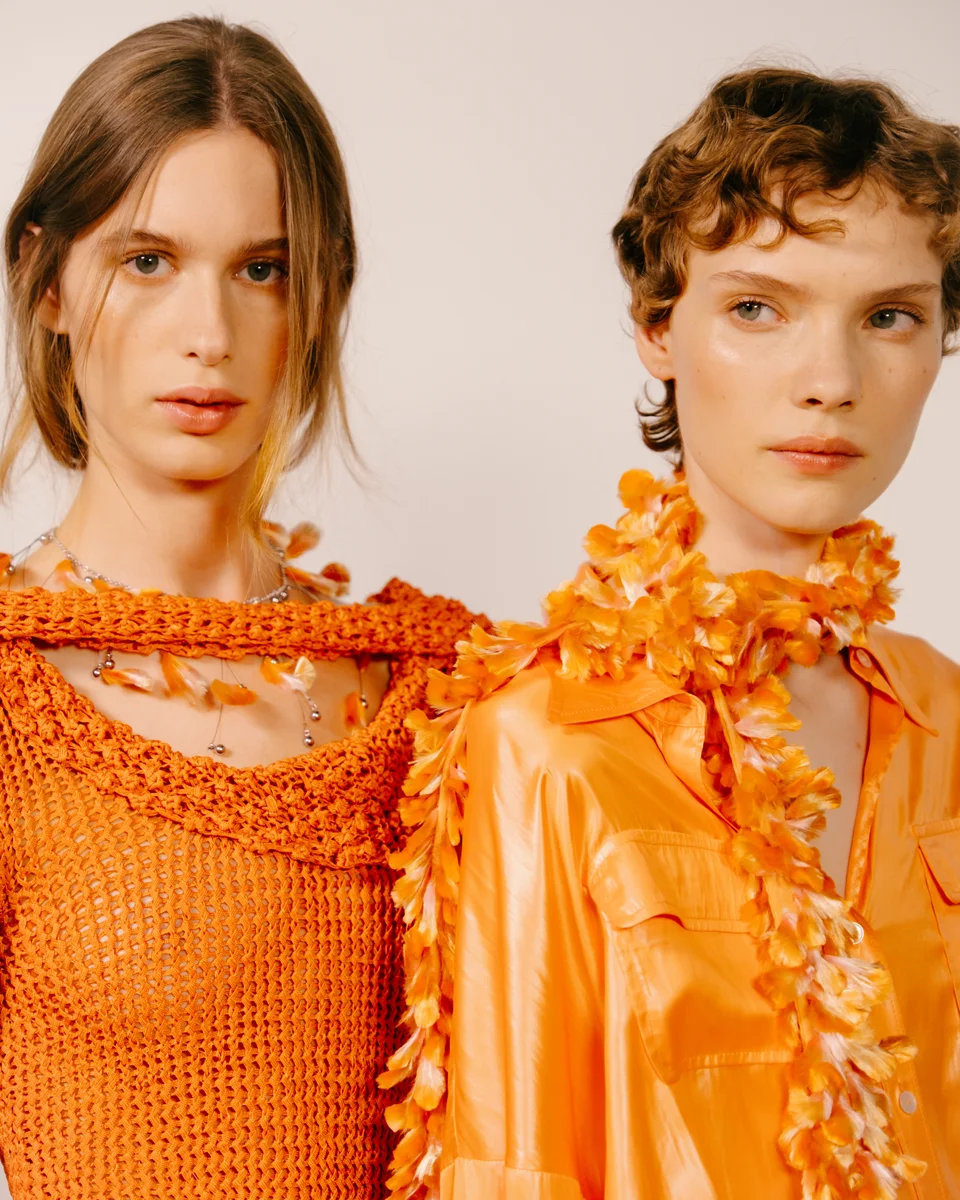
Dresses in tie-dyed paper cotton are layered with metallic embroidery and hand-painted details, turning an inherently lightweight fabric into something visually intricate and tactile. The contrast is deliberate: the clothes feel airy in construction while dense with visual information.
That same instinct appears in the piecrust cardigans, elevated with dimensional floral embroidery. One is styled with a matching Lee Radziwill handbag, creating the kind of coordinated pairing that feels almost like a collector presenting two objects from the same archive.
Rather than treating ornament as decoration added at the end, Burch makes craft part of the clothing’s identity. The eye is encouraged to linger, move closer and discover another layer.
Sharp Cuts
The counterpoint to all that ornament is tailoring.
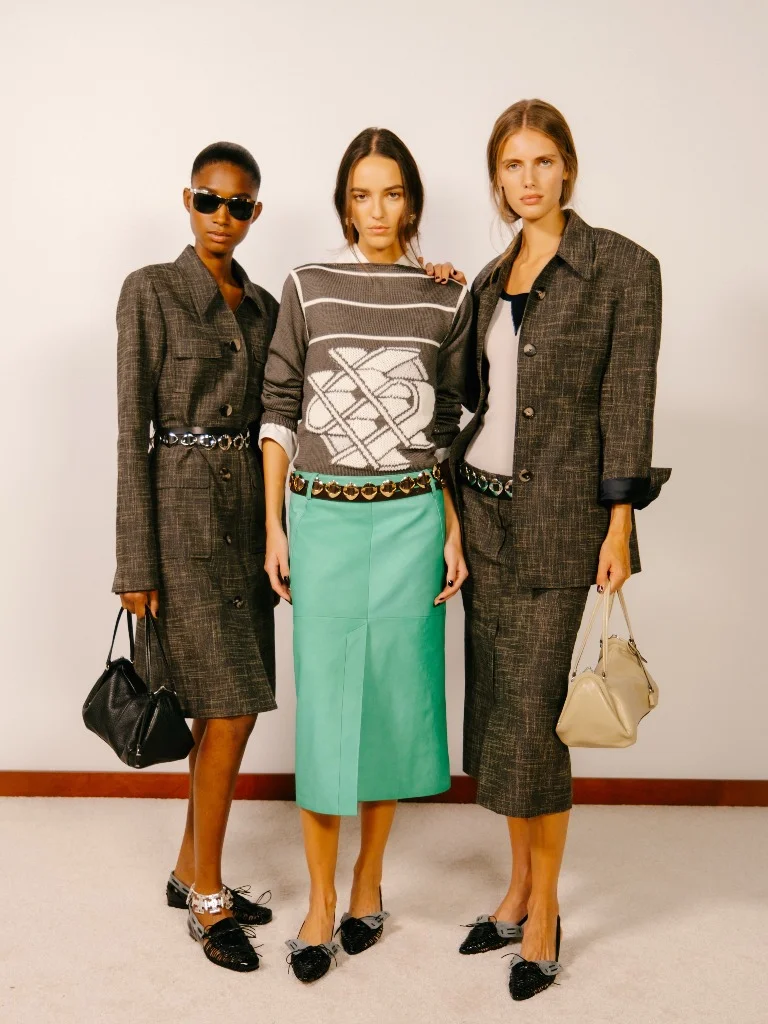
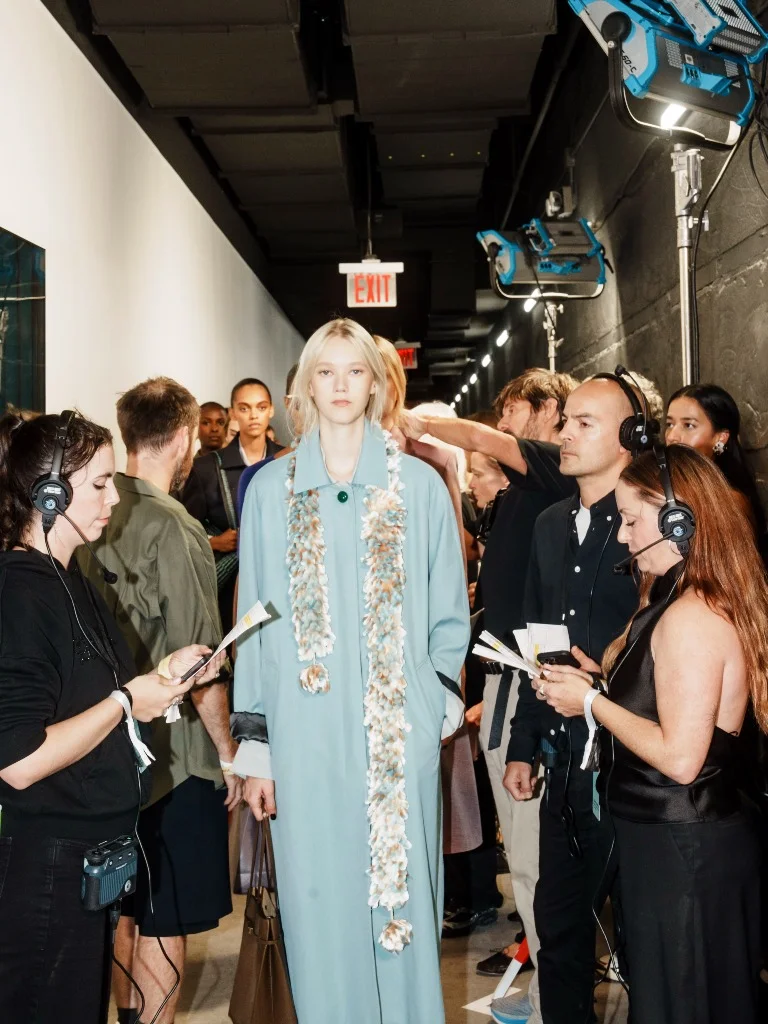
Sharp-shouldered suiting, full opera coats and trim coatdresses bring an architectural clarity to the collection. Sleek patch pockets reinforce their practicality, while shot silk, delicate beading and an unusually expressive color palette prevent these silhouettes from becoming merely utilitarian.
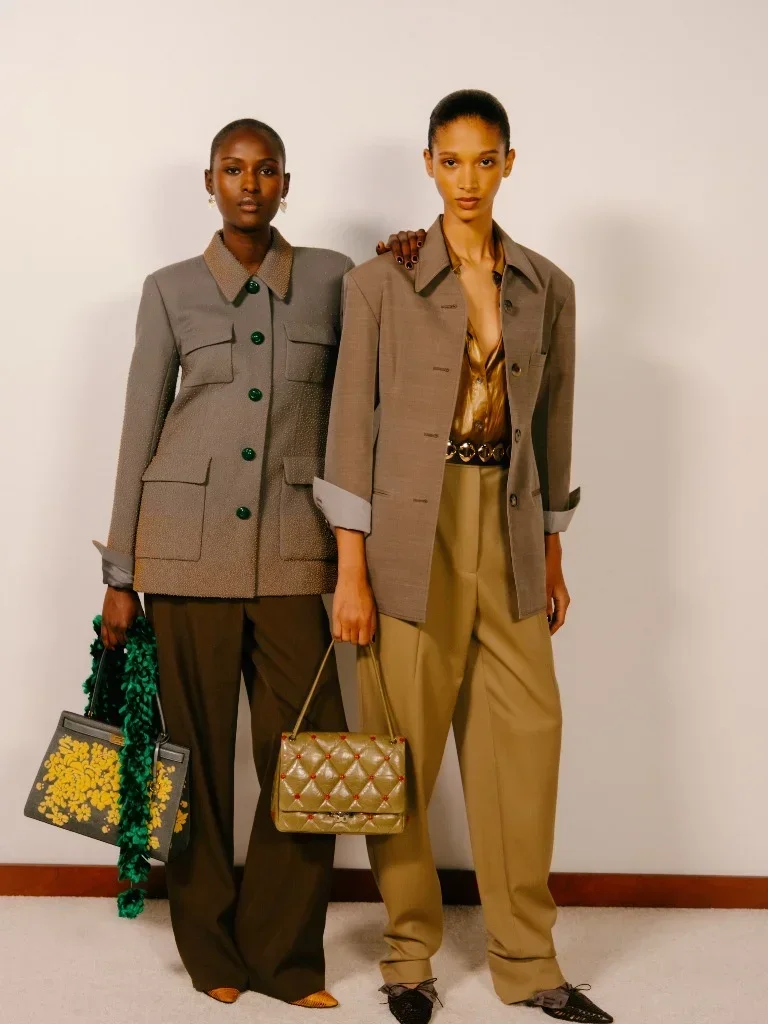
This tension between discipline and decoration is one of the collection’s most compelling ideas. A structured suit can coexist with elaborate embellishment; a practical pocket can sit alongside a precious fabric.
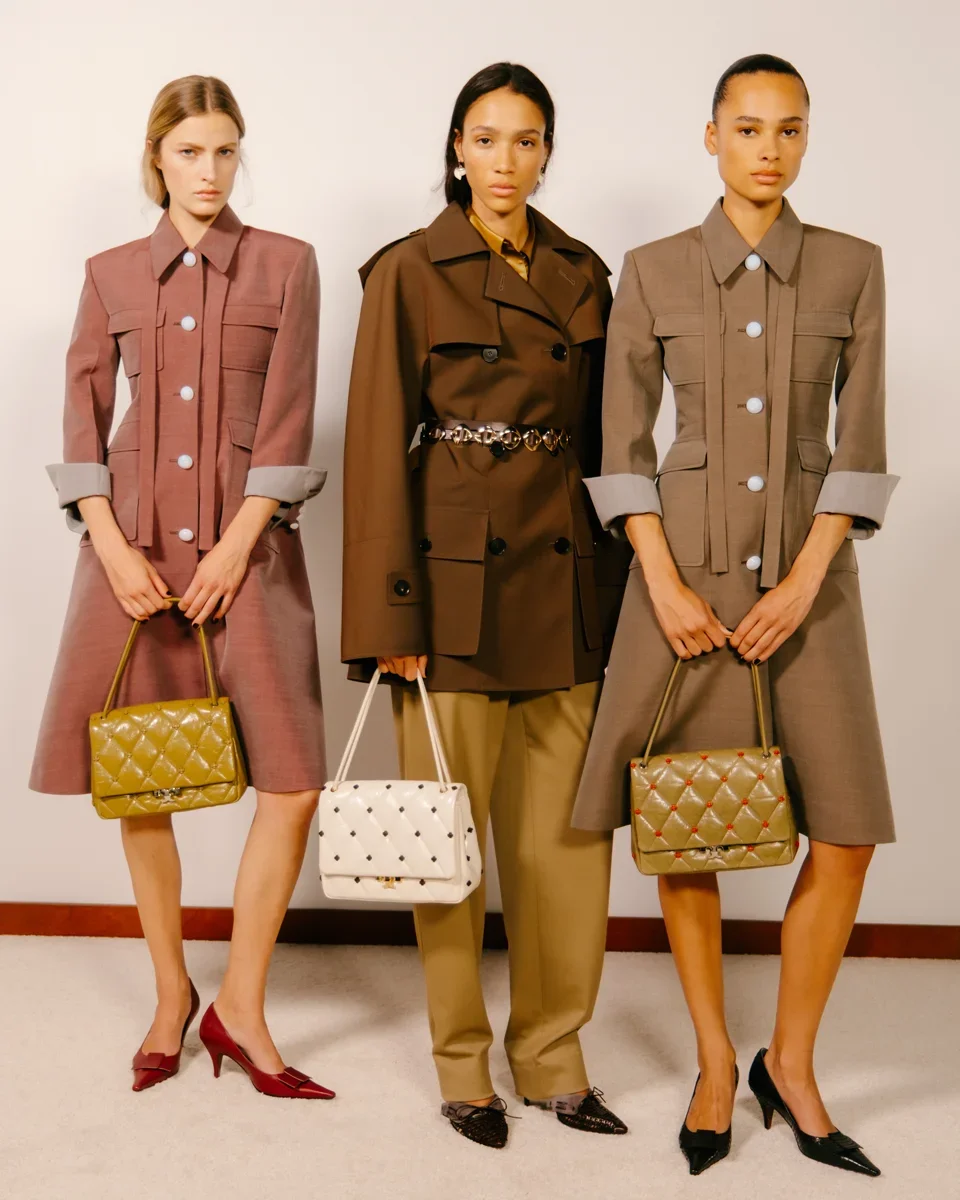
Burch understands that modern luxury does not necessarily mean choosing between function and fantasy. It can mean having both.
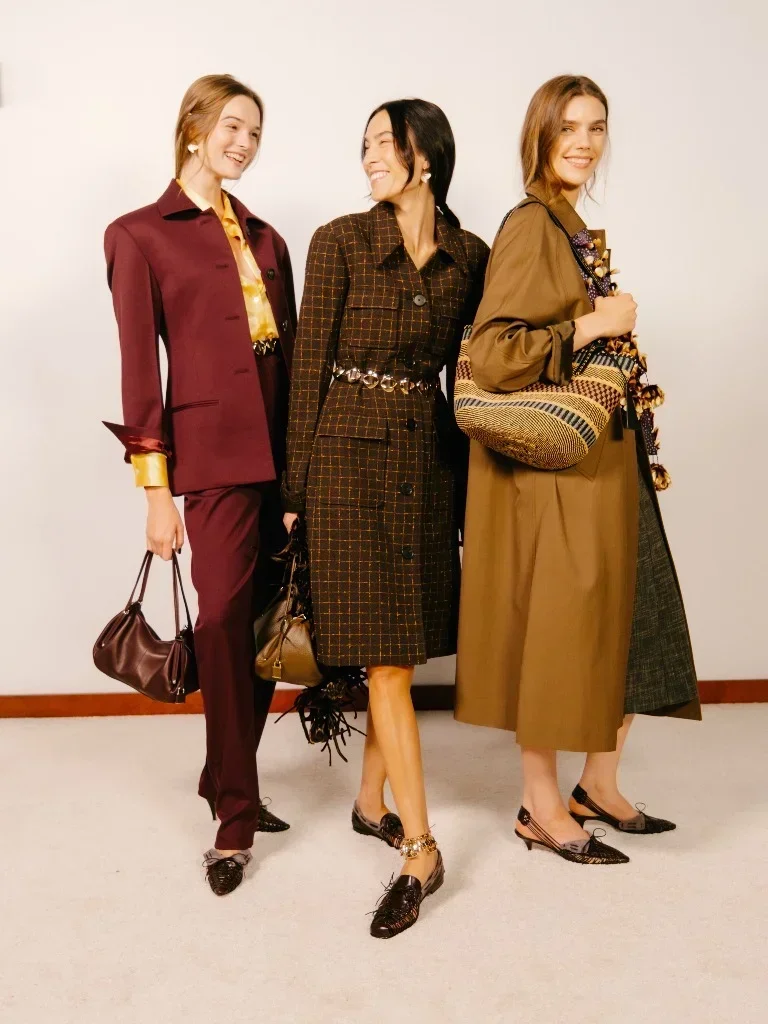
In Full Color
Color provides another form of expression.
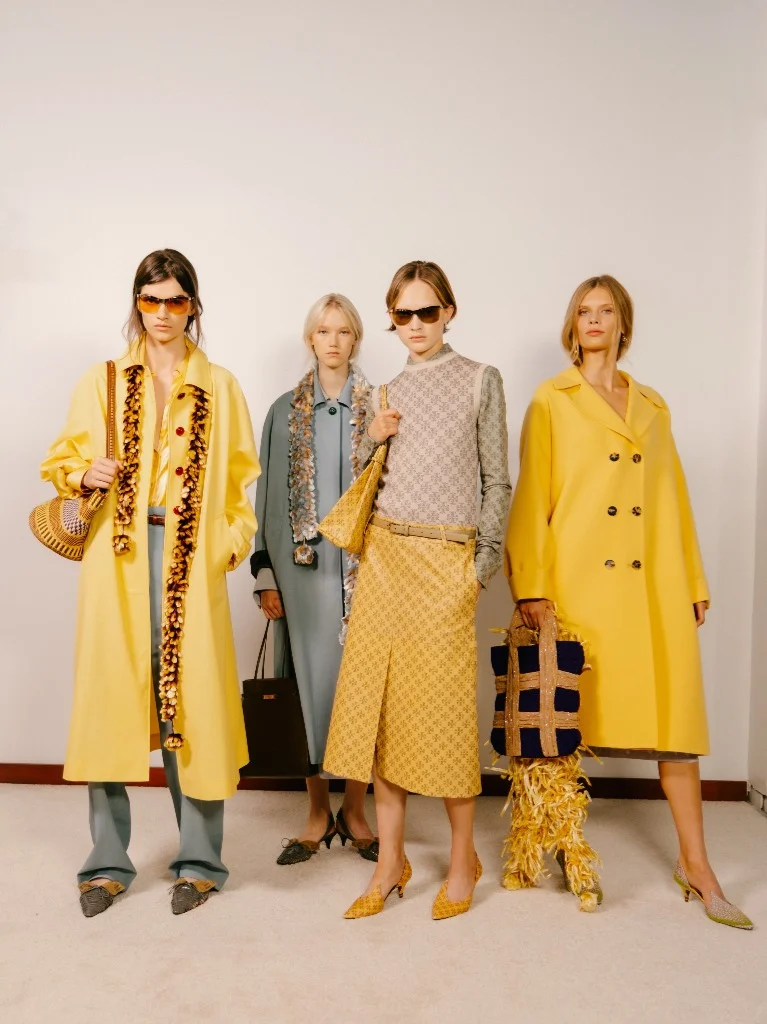
Burch describes the Spring palette as optimistic, moving through saturated shades of persimmon, verdigris, ochre and wisteria, grounded by cool neutrals and deeper jewel tones.
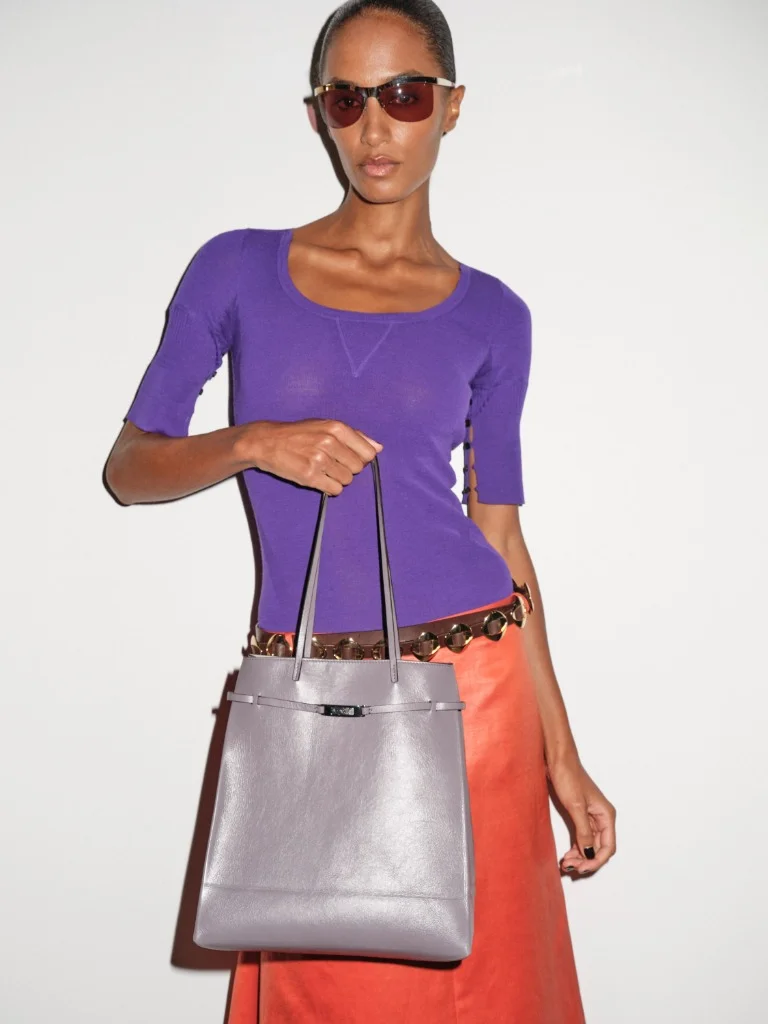
The effect is vivid without feeling juvenile. Color becomes another component in the collection’s larger philosophy of collecting and combining. One shade establishes the mood; another interrupts it.
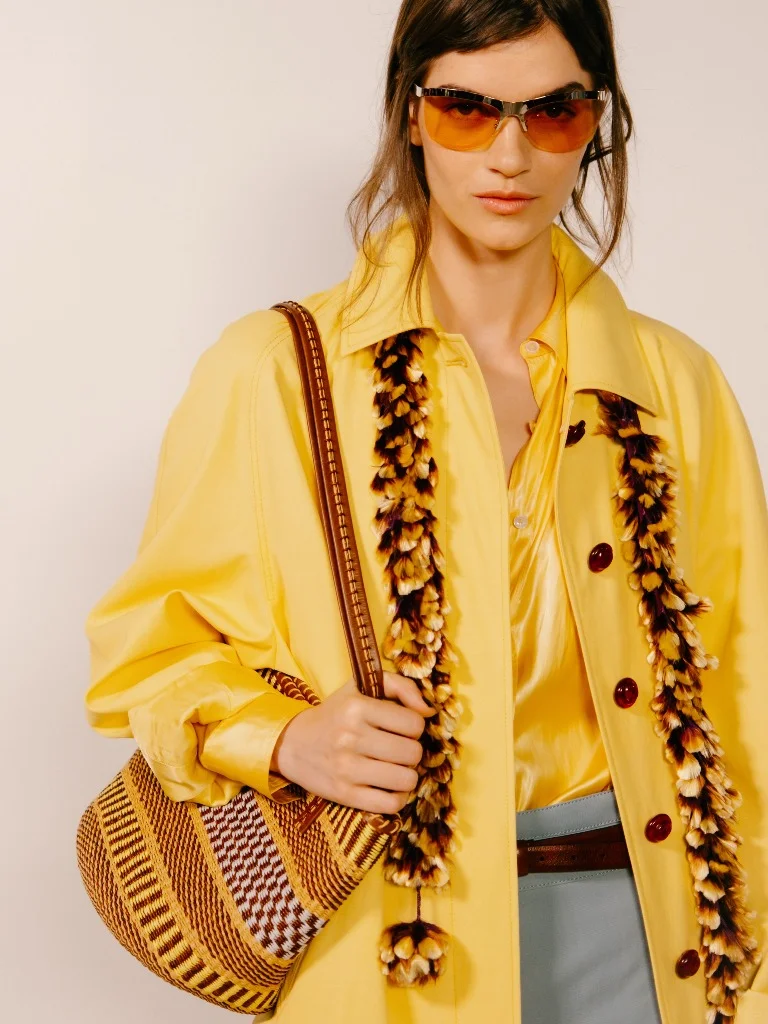
This is dressing as composition — an ongoing process of deciding what belongs together.
Shoes That Wrap Around the Foot
That spirit extends to the footwear, where ready-to-wear ideas of draping and folding are translated directly onto the foot.
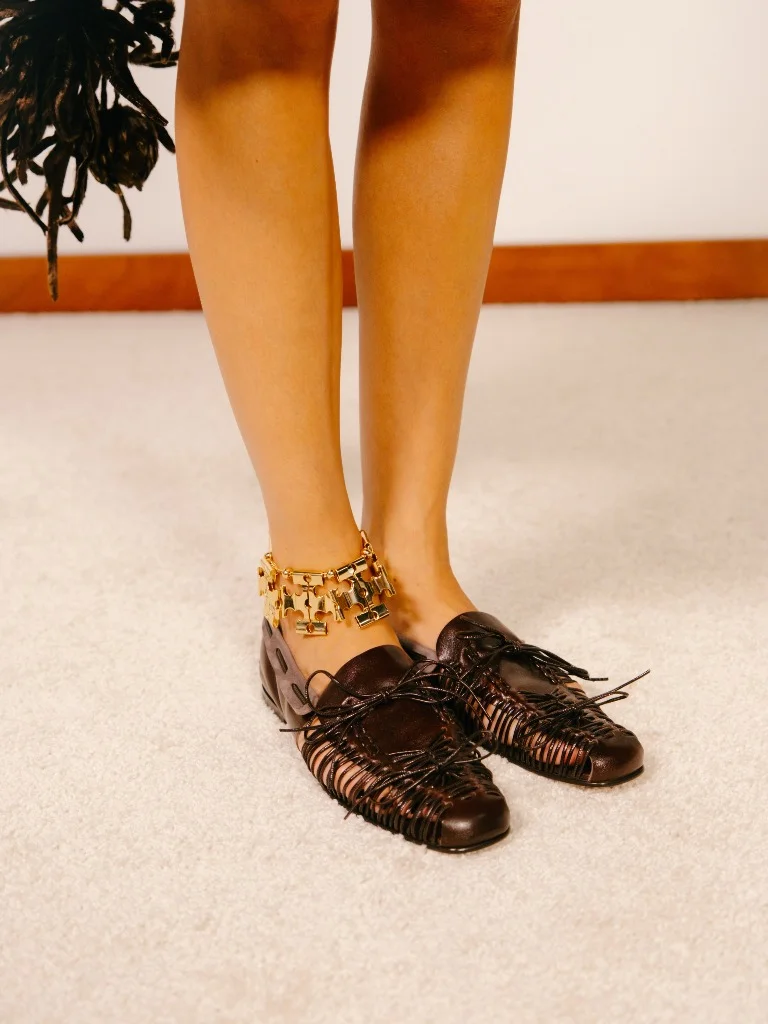
Slim leather cord is woven by hand into softly pointed slingbacks, finished with a fold-over suede vamp that recalls the shape of a shirt collar. A familiar shoe becomes something more considered through texture and construction.
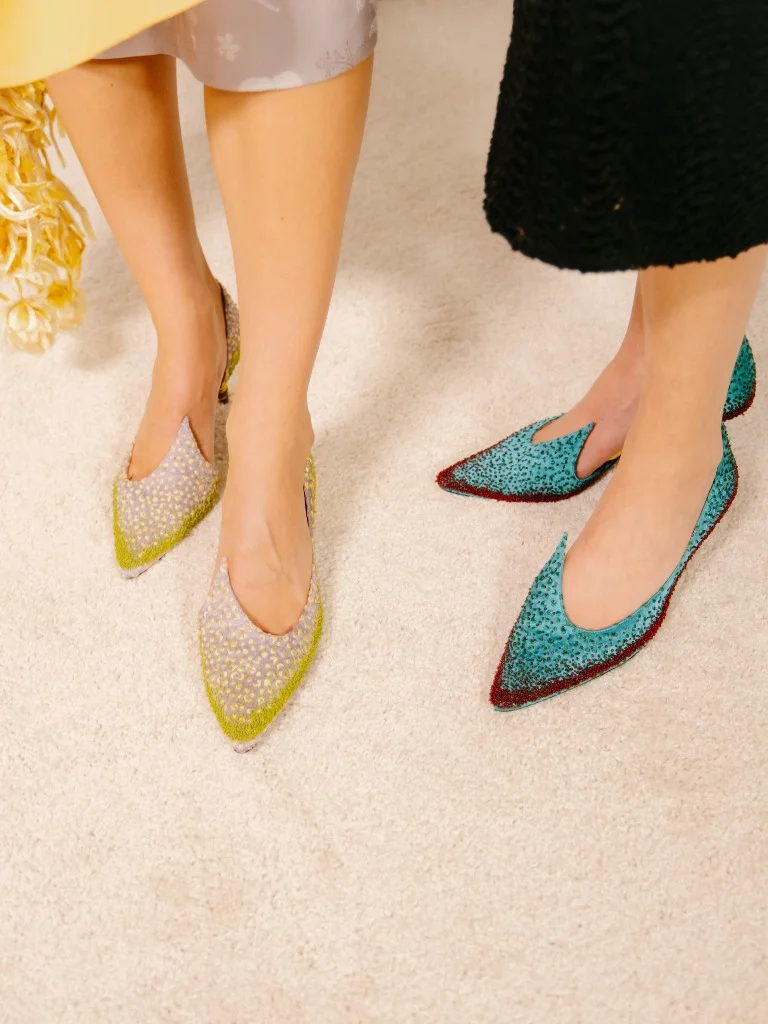
The Venetian-style slippers push the idea further, with embroidery and seed-beading appearing almost as though the shoe has delicately stepped into a puddle of embellishment. Their distinctive silhouette wraps and folds around the foot, echoing Burch’s interest in draping throughout the ready-to-wear collection.
The Bunny Knot pump, introduced on the previous runway, continues its evolution. Its elongated, pointed silhouette is topped with a flat, layered version of the new house code, offering a subtle reflection of the brand’s signature Double T.
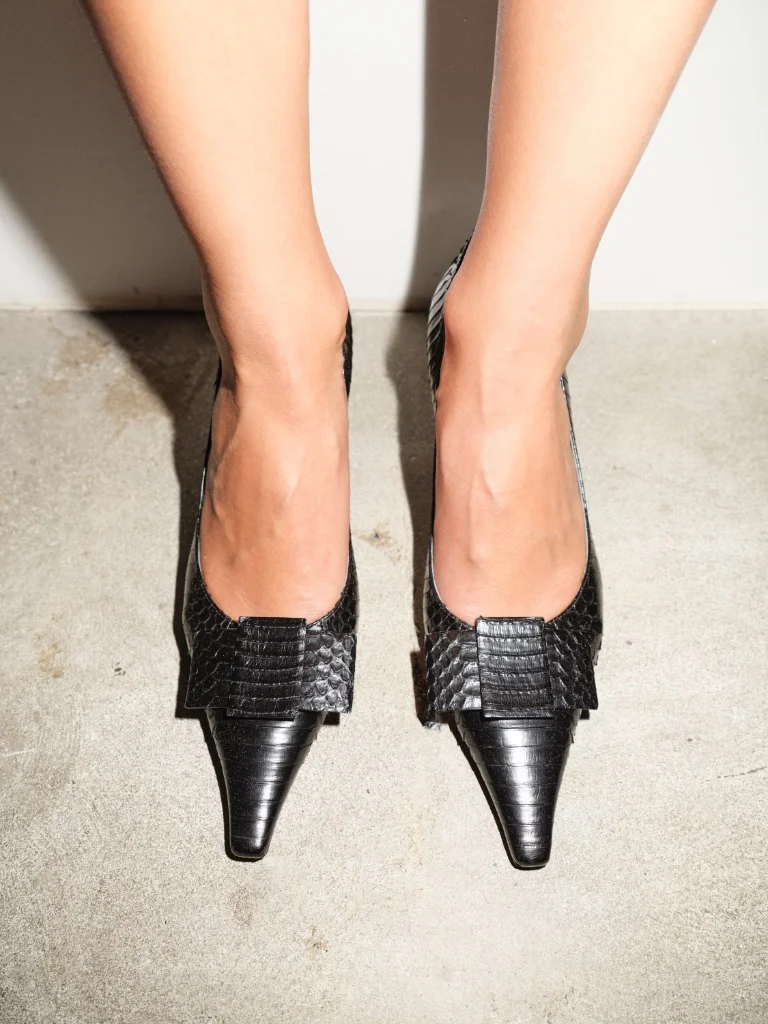
Even the shoes participate in the season’s larger conversation: familiar objects, reconsidered through an unexpected detail.
Accessories With a Sense of Humor
If the clothes explore beauty and utility, the accessories introduce something more mischievous: humor.
A ladylike beaded necklace is reworked through stacked resin beads, knotted nylon and articulated brass spheres that open to reveal colored stones. Faux shark teeth become gilt-edged drop earrings, bringing an almost surreal twist to traditional jewelry.
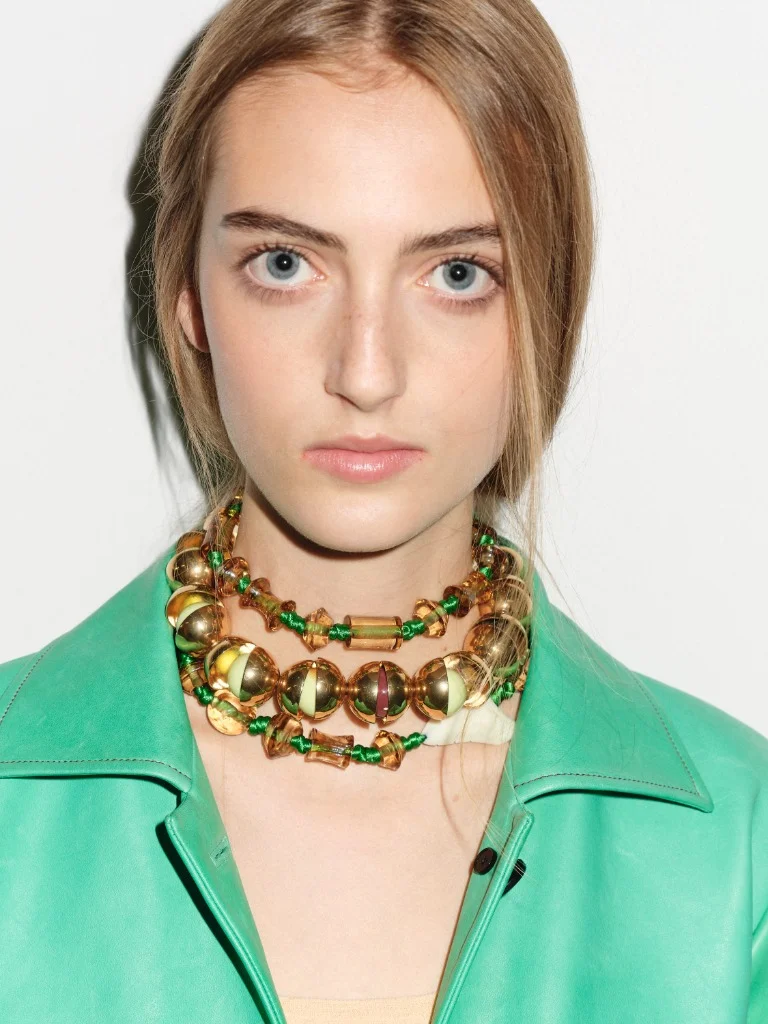
These are accessories designed for a collector’s eye — pieces that reward curiosity.
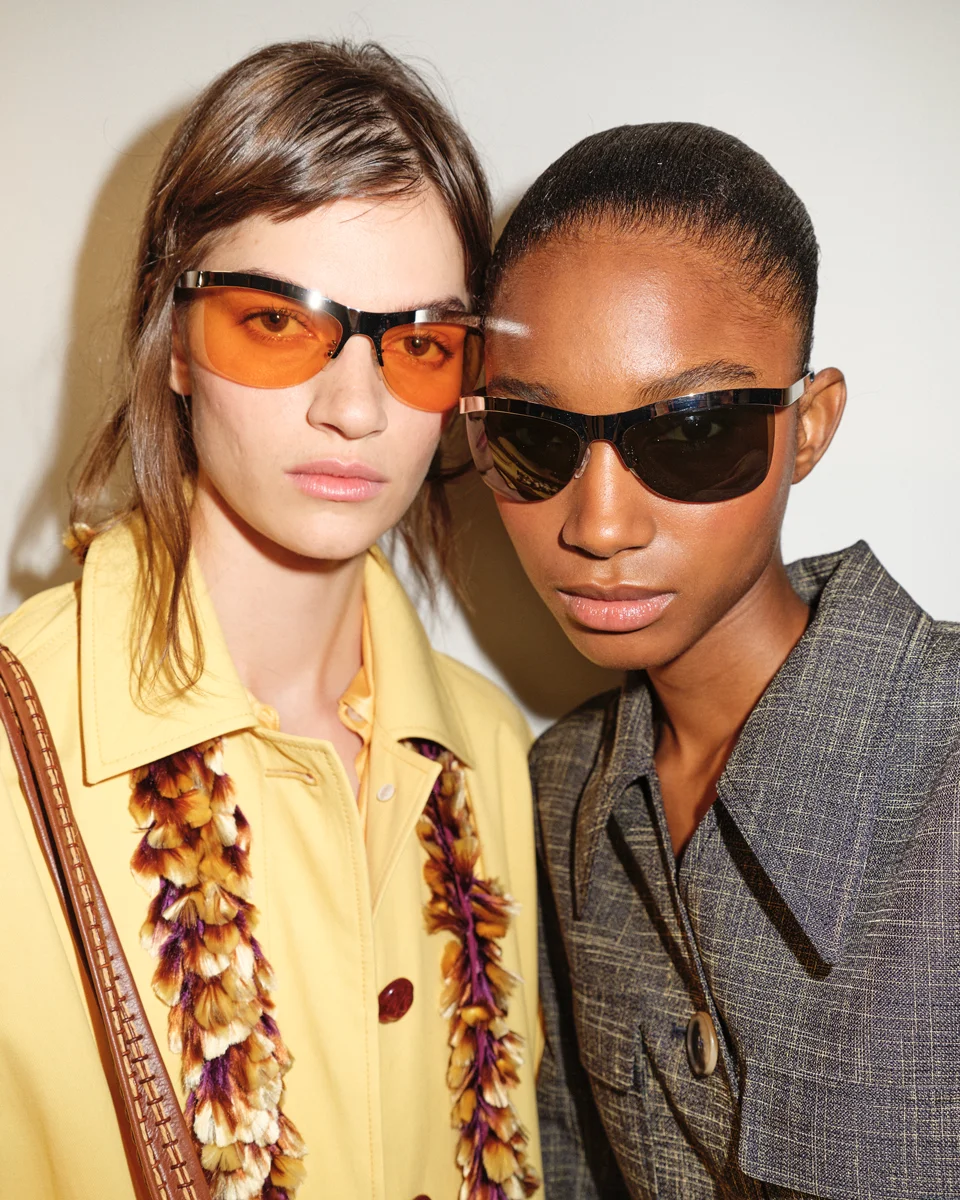
The sunglasses similarly move between practicality and play. Streamlined speed frames provide a functional counterpoint to marbleized-resin styles inspired by safety goggles, complete with gently rounded spoilers.
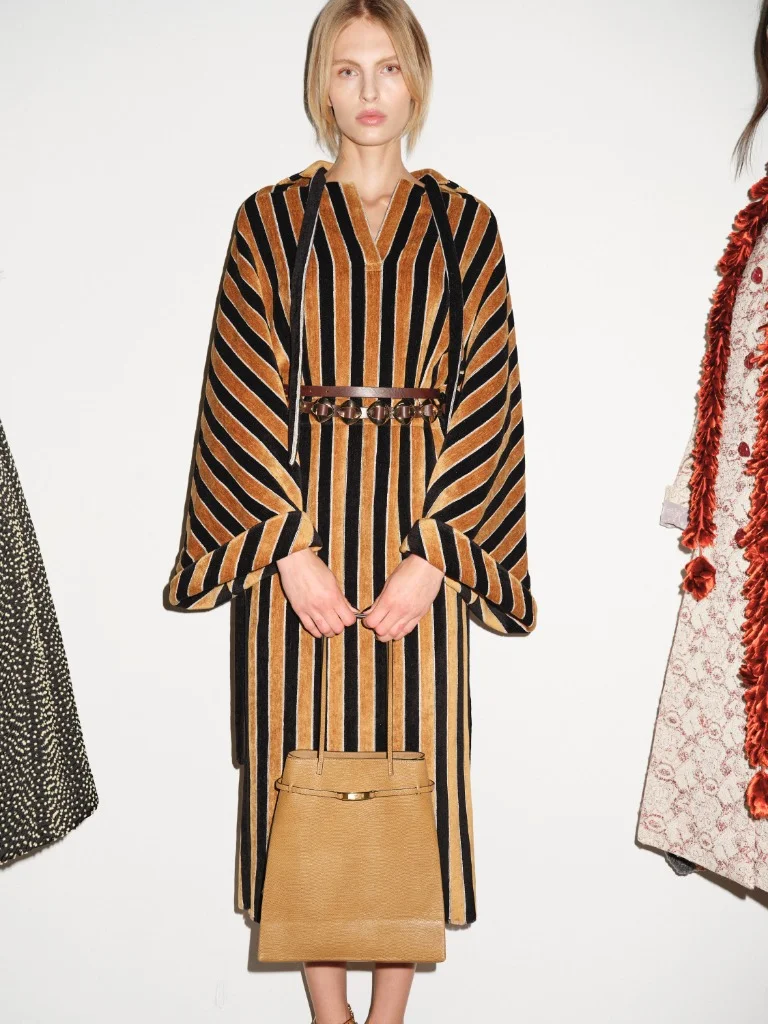
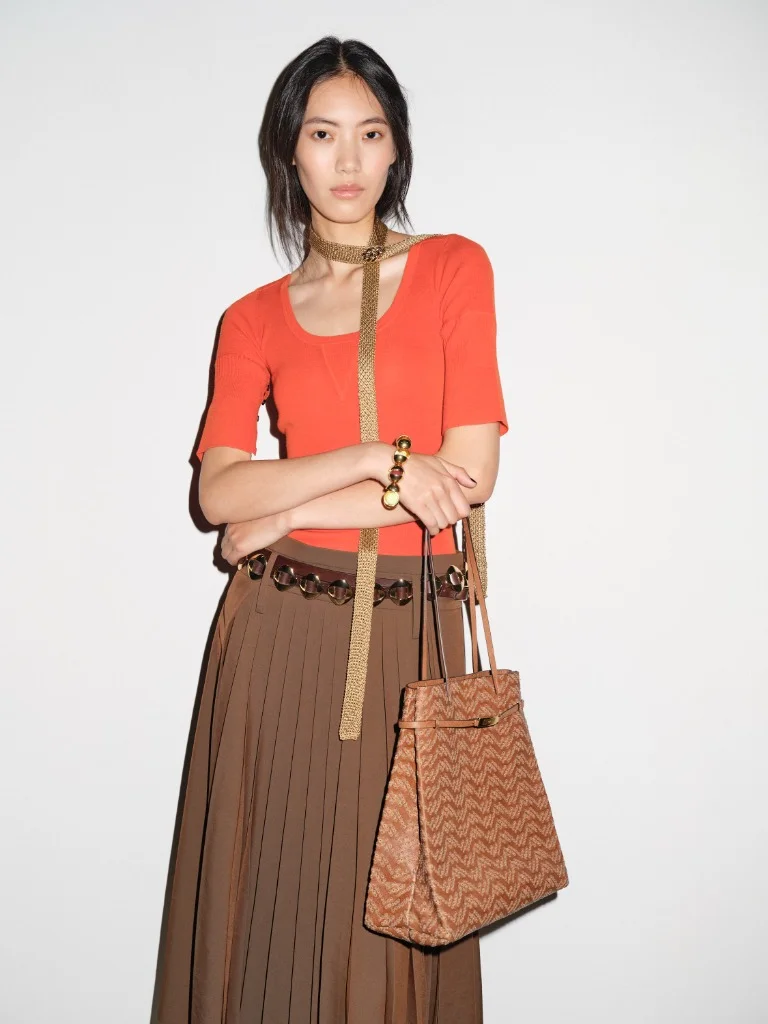
Then comes the double-wrap belt, one of the collection’s quieter but most effective styling devices. Slim leather is threaded with soft-edged squares of hardware, turning the belt into something halfway between jewelry and utility. Across the runway, it adds definition to papery tie-dye dresses, utilitarian tailoring and low-slung pleated skirts.
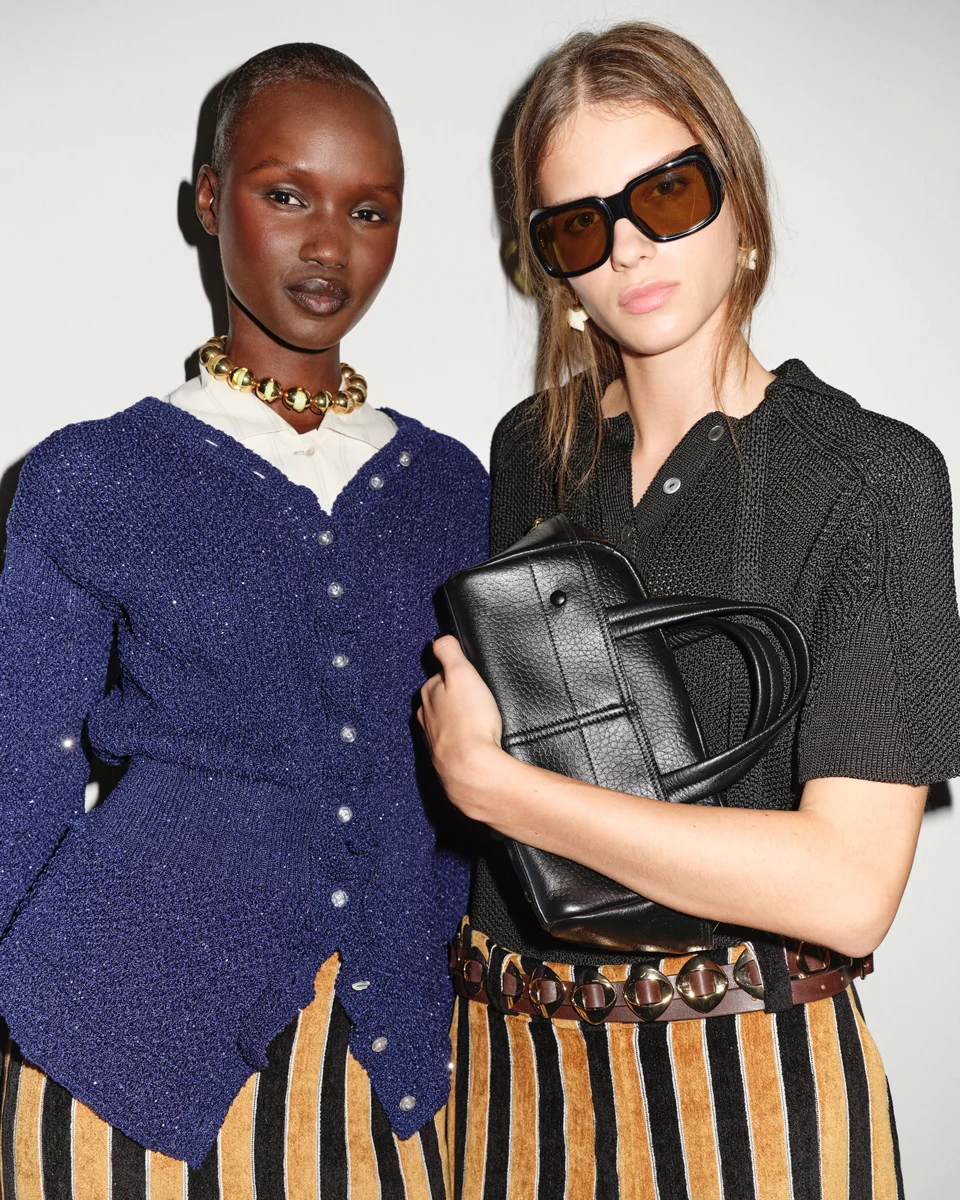
The message is subtle but important: sometimes more is simply one more considered detail.
The Lee Radziwill Gets More Expressive
The tension between opulence and pragmatism continues through the handbags.
The Lee Radziwill Shopper takes inspiration from an everyday paper bag, translated into lightweight bonded leather with thin straps and elegantly slimmed-down hardware.
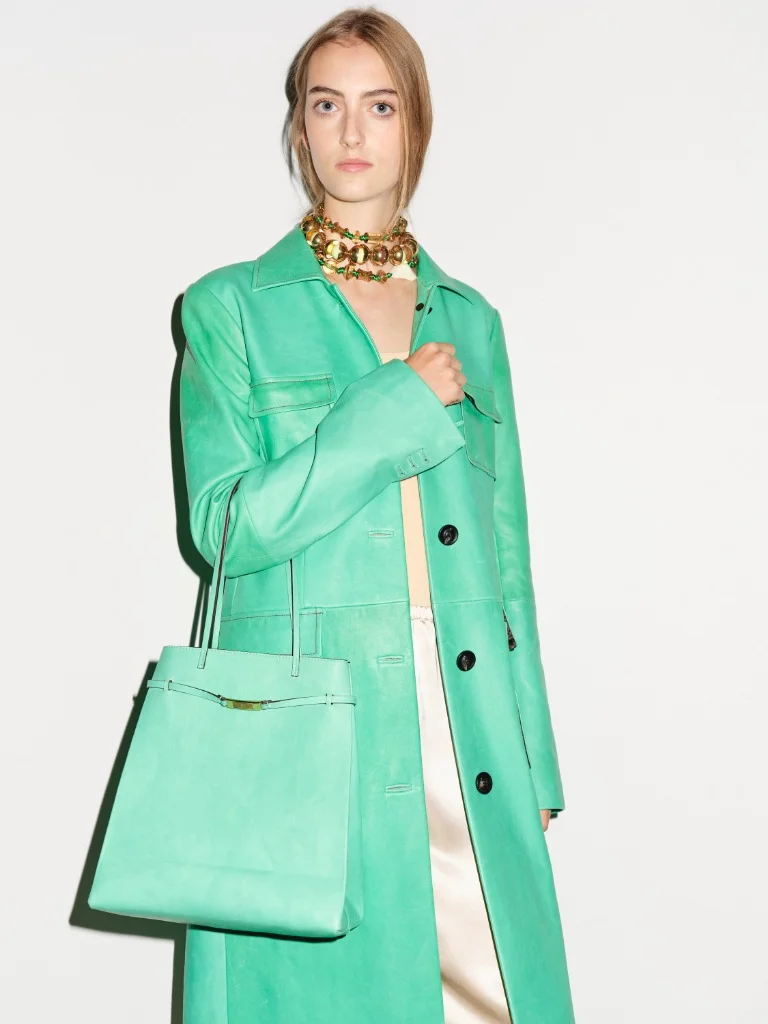
It is a study in reduction — an ordinary object distilled into a sophisticated accessory.
The Lee Radziwill Classic, meanwhile, moves in the opposite direction. The structured frame bag, introduced in 2018, returns with colorful dimensional floral embroidery that echoes the craft seen throughout the ready-to-wear collection.
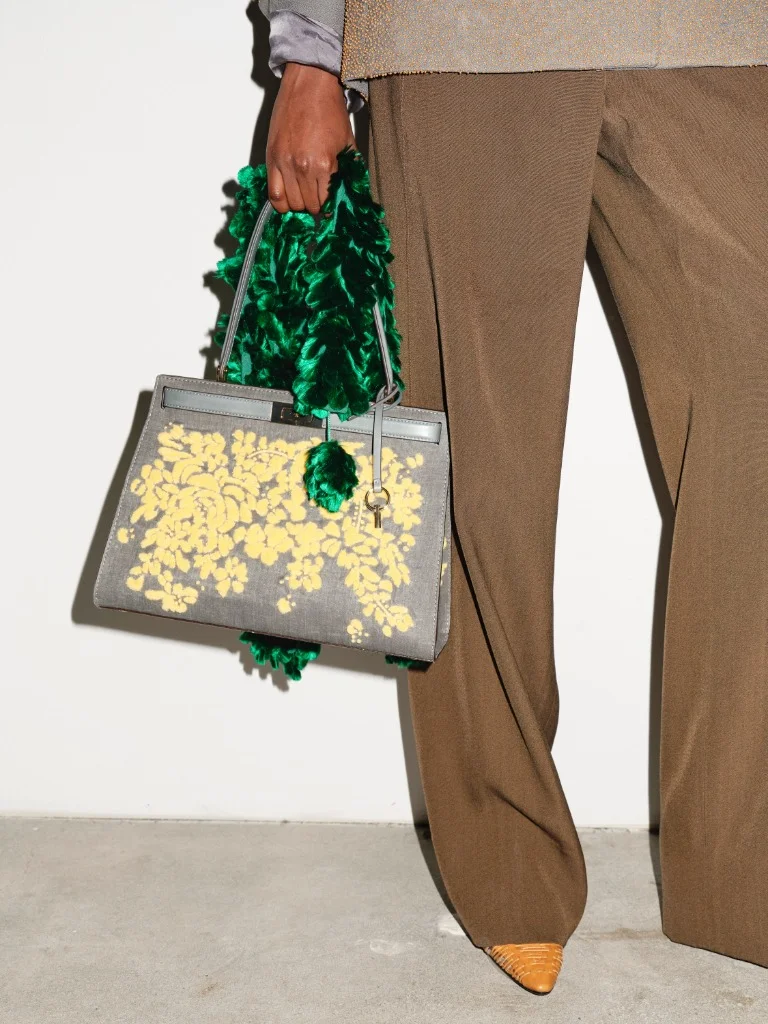
Together, the two versions capture the collection’s central duality: one familiar and restrained, the other decorative and expressive, both grounded in function.
Sealed With a Kiss
A softer evolution of last season’s Buddy Satchel arrives in the form of the Double Frame shoulder bag.
Bookended by kiss-lock pouches and finished with a tiny padlock zip pull, the feminine daytime silhouette is practical but deliberately unexpected.
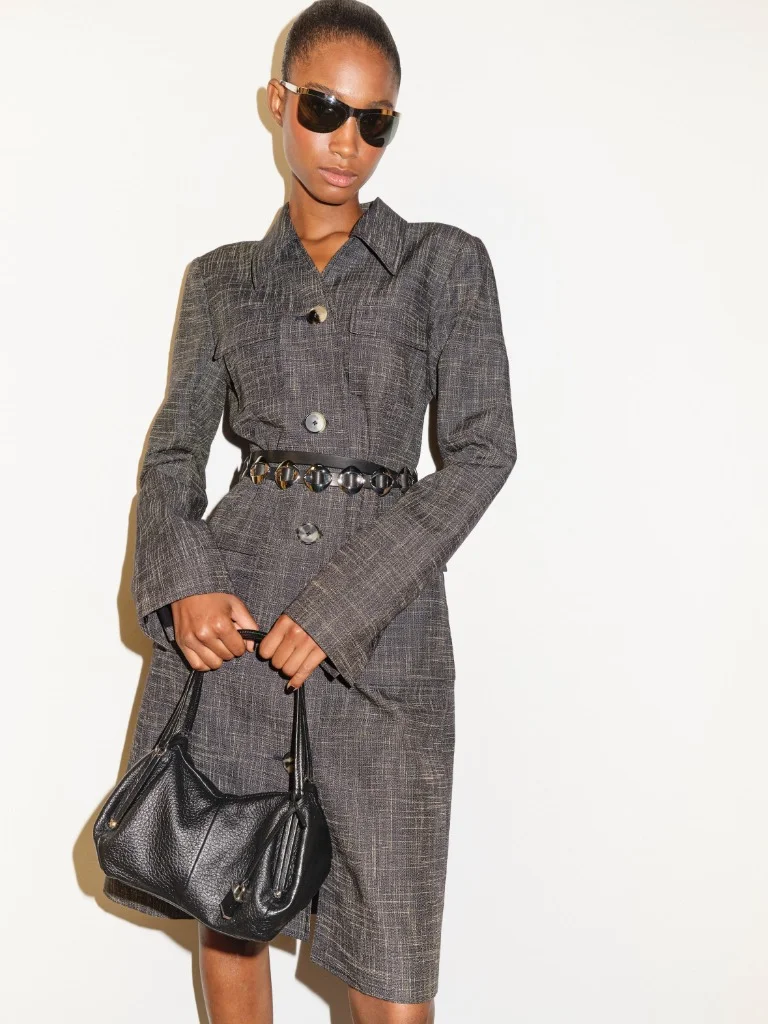
It is another example of Burch finding humor in the details — taking a functional object and giving it a small twist that changes how it is perceived.
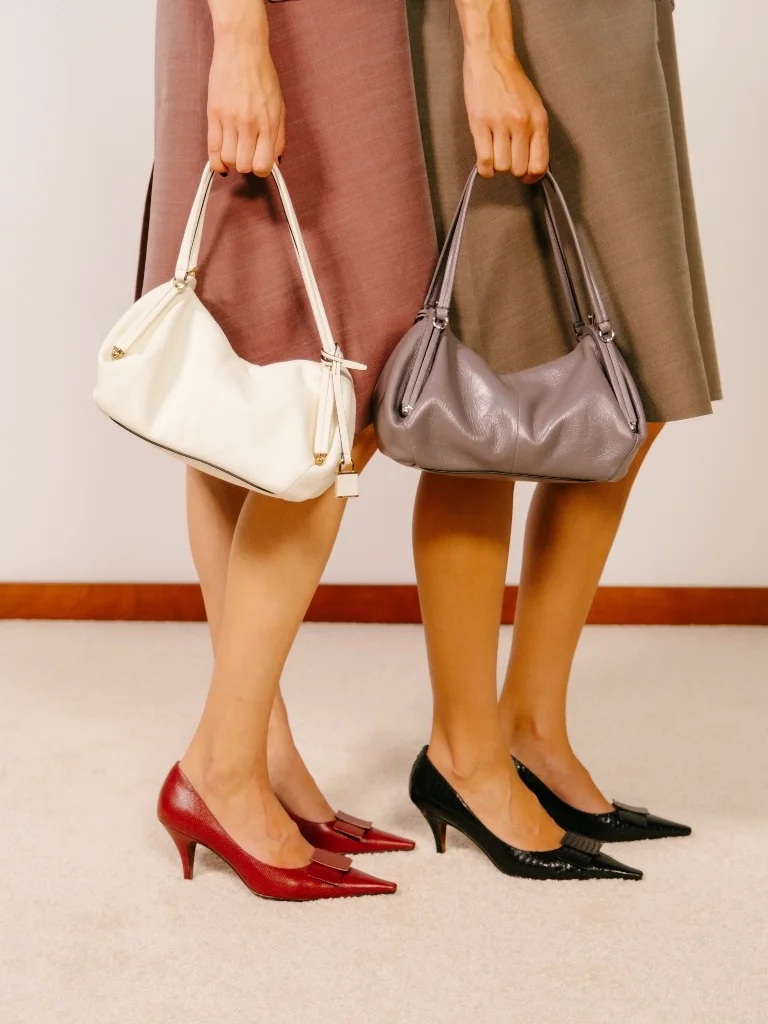
A Runway Return
The handwoven basket from the Fall/Winter 2026 runway returns for Spring 2027 in new colors and patterns.
Inspired by the bags Burch carried in high school, the totes are created in partnership with Indian artisans at Marasim, connecting personal memory with traditional craftsmanship.
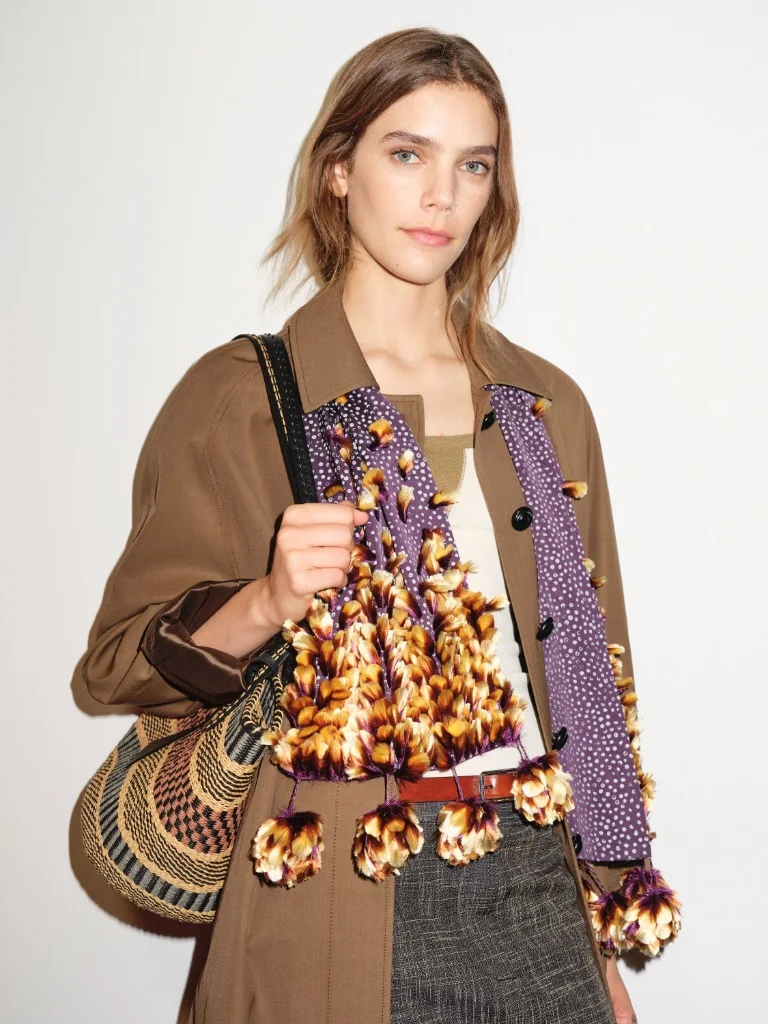
Its return also reinforces an important idea within the collection: fashion does not have to be new to feel relevant. Objects gain meaning through repetition, memory and the way they become part of a person’s life.
Explore the Tory Burch THE RUNWAY SHOP .
The New Luxury Is Knowing What to Combine
Ultimately, Tory Burch’s Spring/Summer 2027 collection is not really an argument for excess. It is an argument for intentional abundance.
The distinction matters.
A woman dressing for herself is not necessarily choosing between minimalism and maximalism. She is making decisions based on instinct — knowing when a look needs another layer, when a vivid color should interrupt a neutral, when a practical bag deserves an unexpected embellishment.
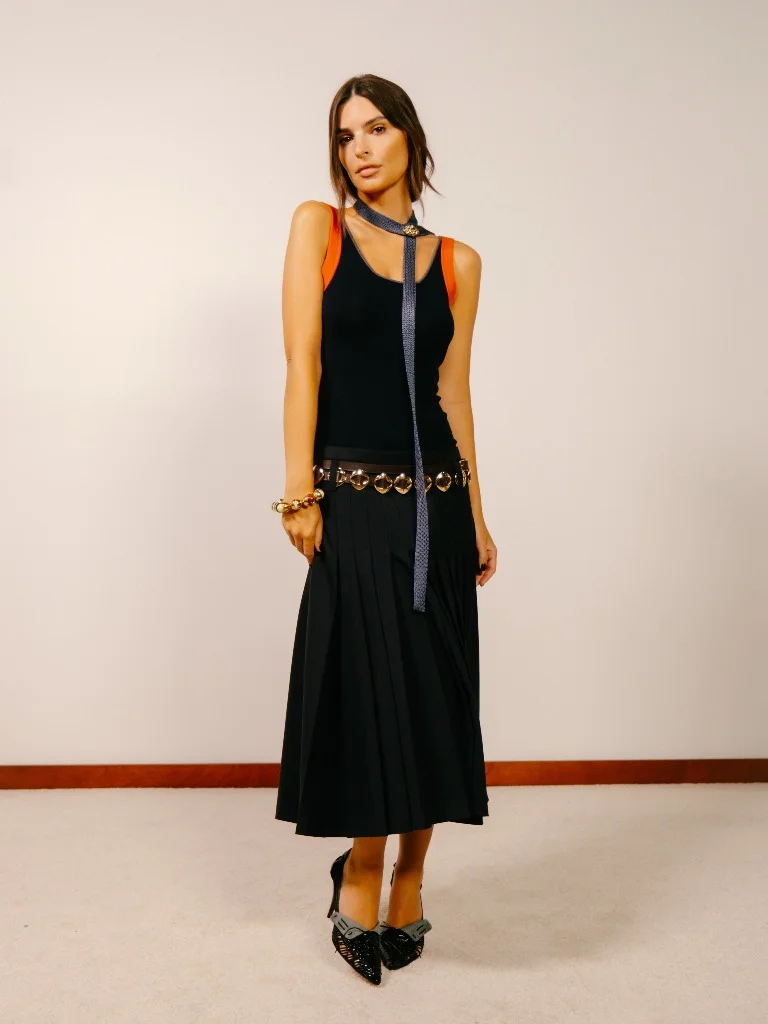
That is the psychology running through Burch’s runway.
The tie-dyed dress, the embroidered cardigan, the sharp suit, the wrapped slingback, the shark-tooth earring and the sculptural handbag do not compete for attention. They create a wardrobe in which every object can have its own personality.
For Spring 2027, “more is more” becomes less a command than a permission slip: to collect, combine, experiment and find pleasure in the act of getting dressed.
And perhaps that is the most modern form of luxury — not owning more, but knowing exactly what deserves to be put together.
Related Brands
Related Looks

Anne Hathaway in Ralph Lauren at the Fall 2025 Show
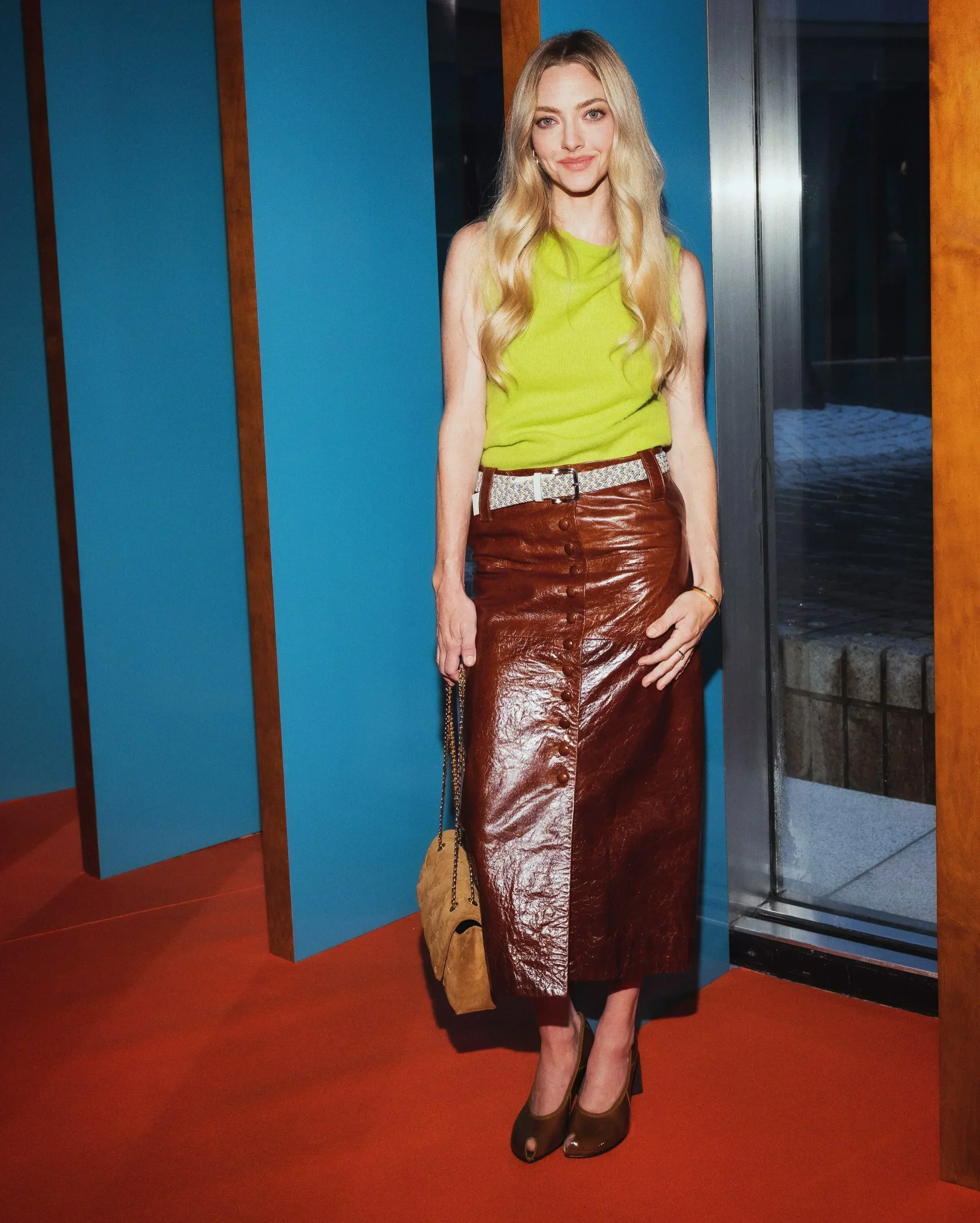
Amanda Seyfried Puts a Fresh Spin on Color-Blocking in Chartreuse and Burgundy at Tory Burch

Miranda Who? Anne Hathaway Reclaims the Red Legacy in Valentino at BVLGARI's Milan Gala

Bella Hadid in Emilio Pucci Occhi Print Jumpsuit in Saint-Tropez

Anne Hathaway Reclaims Her 'Devil Wears Prada' Era in Valentino Pre-Fall 2026

Sabrina Carpenter in Vintage Versace at the 2026 Met Gala After-Party

Lauren Sánchez Bezos in Pearl-Accented Navy at the 2026 Met Gala
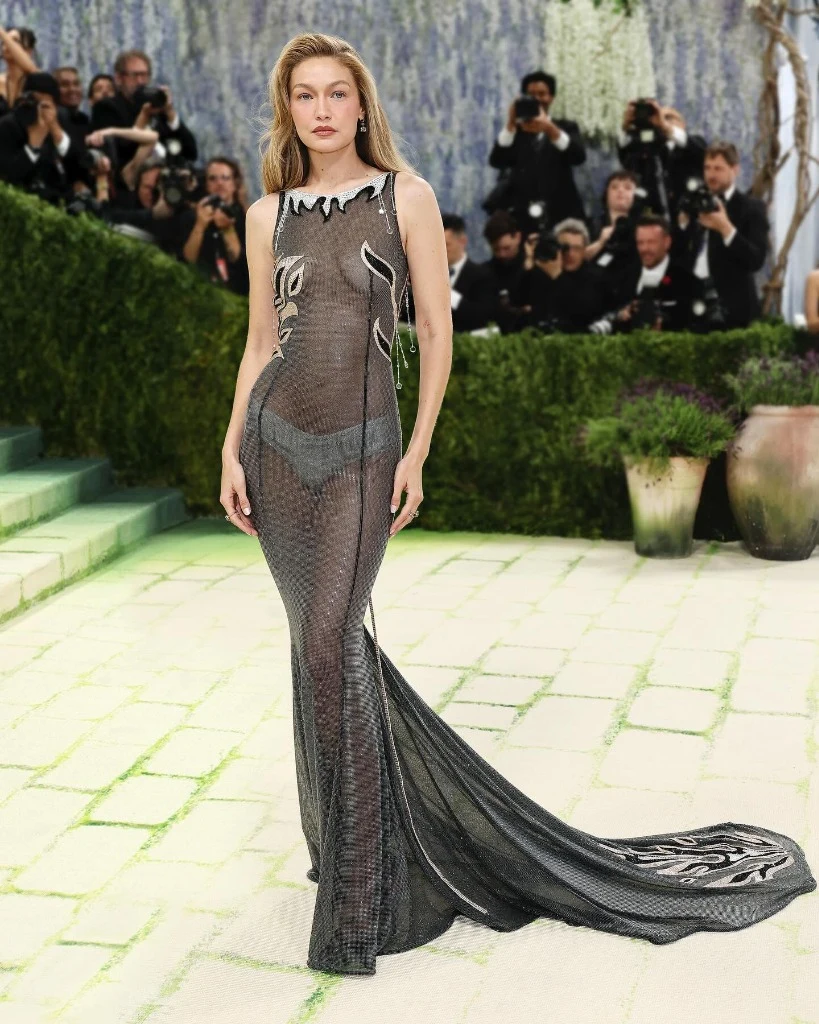
Gigi Hadid Turns Her Body Into a Canvas in Miu Miu at the 2026 Met Gala
Related Stories

Behind the Stone: Decoding Heidi Klum's Living Marble Met Gala Transformation

Inside Kendall Jenner and Jacob Elordi's Low-Key Relationship Timeline

Beyond the Veil: Decoding the Fashion Psychology of Euphoria’s Season 3 Wedding

The Quiet Revolution on the Met Steps: How Zac Posen Turned a Humble Gap T-Shirt Into High-Fashion Mythology for Kendall Jenner

The Altar of Anxiety: Decoding the Visual Tension of A24’s The Drama

Madonna & Sabrina Carpenter’s “Bring Your Love” Hits #1 in 37 Countries

Dior Fall/Winter 2026 by Jonathan Anderson: Pleasure Gardens, Peplum Drama, and the Gen Z Reset We’ve Been Waiting For
