
Emily Carter
Editor
Jul 7, 2026
On July 7, 2026, Chanel transformed Paris’s Grand Palais into a fantastical garden where towering beanstalks twisted toward the vaulted glass ceiling, oversized carnivorous-looking flowers appeared to bloom from another world, and fashion unfolded like the tactile pages of an enchanted storybook. Yet beneath the theatrical mise-en-scène, the house’s Fall/Winter 2026 Haute Couture collection delivered a far more intimate, human message: that the greatest fashion stories are never merely about ungrounded fantasy, but about the real women who wear the clothes and the lives they actually lead.
For Matthieu Blazy, Artistic Director of Fashion Activities at Chanel, this second haute couture outing was an opportunity to dismantle the boundary between pure imagination and everyday reality. Drawing inspiration from a rare, petite volume of fairy tales tucked away in Gabrielle “Coco” Chanel’s private library on Rue Cambon, Blazy christened the collection Gaby and the Beanstalk—a playful yet intellectually rigorous reinterpretation of classic childhood lore filtered through the house’s storied craftsmanship, archival codes, and Gabrielle’s foundational belief in dressing women for lived mobility.
The result was an extraordinary runway tension: gossamer-translucent tailoring, intricately woven denim-mimicking tweeds, hand-embroidered botanical skirts, and a finale that pointedly challenged couture’s bridal orthodoxy. It served as a potent reminder that haute couture can evoke pure wonder without losing touch with the living, breathing body inside the garment.
Inside the Grand Palais: A Fairy Tale With a Darker Edge
The first impression upon stepping into the Grand Palais was unmistakably theatrical. The vast nave had been overtaken by colossal vines and surreal flora, creating an overgrown botanical world that felt simultaneously wondrous and subtly unsettling. The scenography subtly married the climbing canopy of Jack and the Beanstalk with the uncanny, wild jungle of the 1990s cult cinema classic Jumanji, where nature is never manicured, but alive, unpredictable, and faintly perilous.
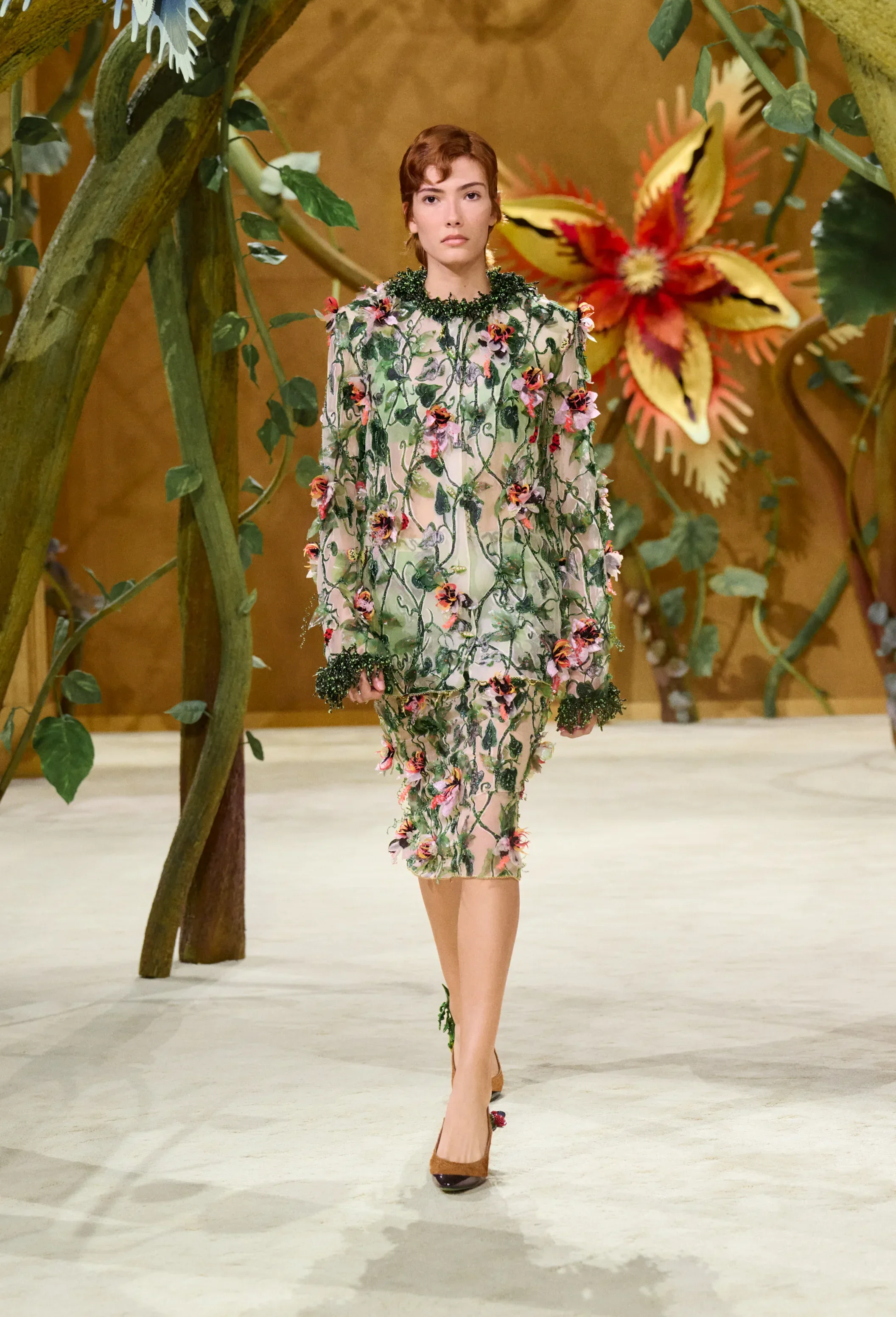
Rather than offering an idyllic, confectionery fairy-tale setting, Blazy infused the space with beauty laced with danger. Spiky, venomous-hued blooms and predatory tendrils hinted that childhood folklore often conceals deeper, darker, and more complicated truths.
That atmospheric duality was mirrored directly in the garments. Weightless silks, intricate needlework, and storybook motifs were continually anchored by clean, razor-sharp tailoring and grounded, functional silhouettes. While the environment welcomed guests into a dream, the clothes insisted on remaining tethered to the physical world.
“The set established the collection’s central inquiry: what happens when the imaginative universe of fairy tales collides with the daily reality of a modern woman?”
The Story Behind Gaby and the Beanstalk
The narrative seed took root inside Gabrielle Chanel’s personal apartment library: an antique, leather-bound volume titled Les Fées, contes des contes (Fairies, Tales of Tales). For Blazy, the book unlocked a fresh perspective on Mademoiselle Chanel’s biography, framing her life not as an embalmed luxury mythology, but as an audacious fairy tale of self-determination.
“I created my life because my life did not please me,” Gabrielle Chanel famously declared—a quote that encapsulates the grit and fierce ambition driving her radical transformation from an impoverished orphan in Aubazine to the premier arbiter of modern fashion.
Blazy drew an astute parallel between Chanel’s meteoric rise and the journey of Jack and the Beanstalk. In the traditional fable, an underdog from humble beginnings climbs an impossible vine into the clouds, retrieves rare treasures, and alters destiny through sheer resourcefulness and nerve. For Blazy, that climb is the quintessential Chanel allegory.
Elements of Goldilocks and the Three Bears, Puss in Boots, and The Ugly Duckling subtly surfaced across the collection. Yet these nods were rarely literal or costume-like. Instead, they took shape as tactile discoveries: an unexpectedly sculpted handbag, a hidden painted silk lining, whimsical sunflower buttons, or a green vine quietly winding up the heel of a pump.
The Opening Look: A Chanel Suit Reimagined
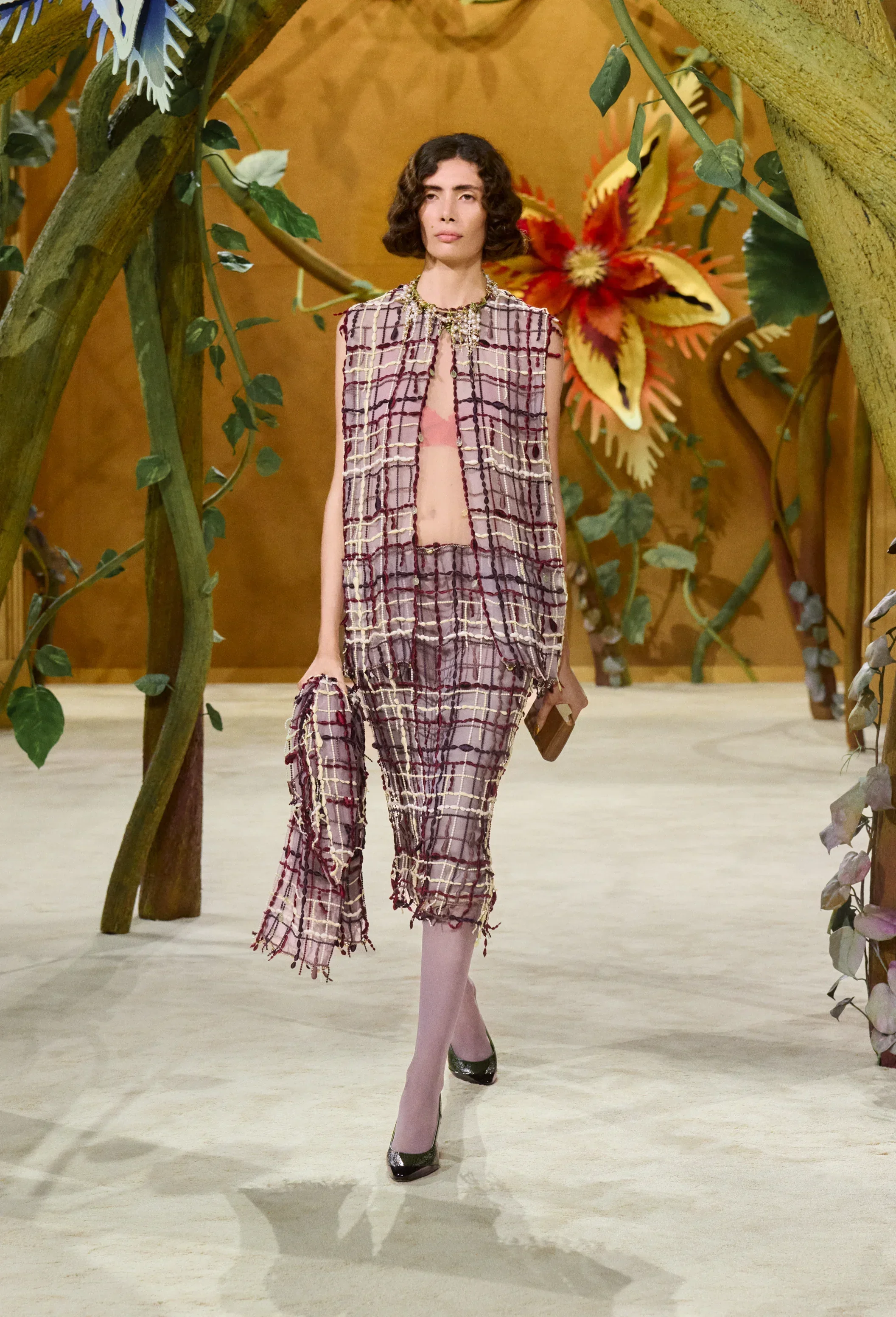
The show opened with an arresting statement of intent: a model walking the sand-colored floor in a sheer, gossamer interpretation of the classic Chanel suit, carrying under her arm the very antique fairy-tale volume that sparked the entire season.
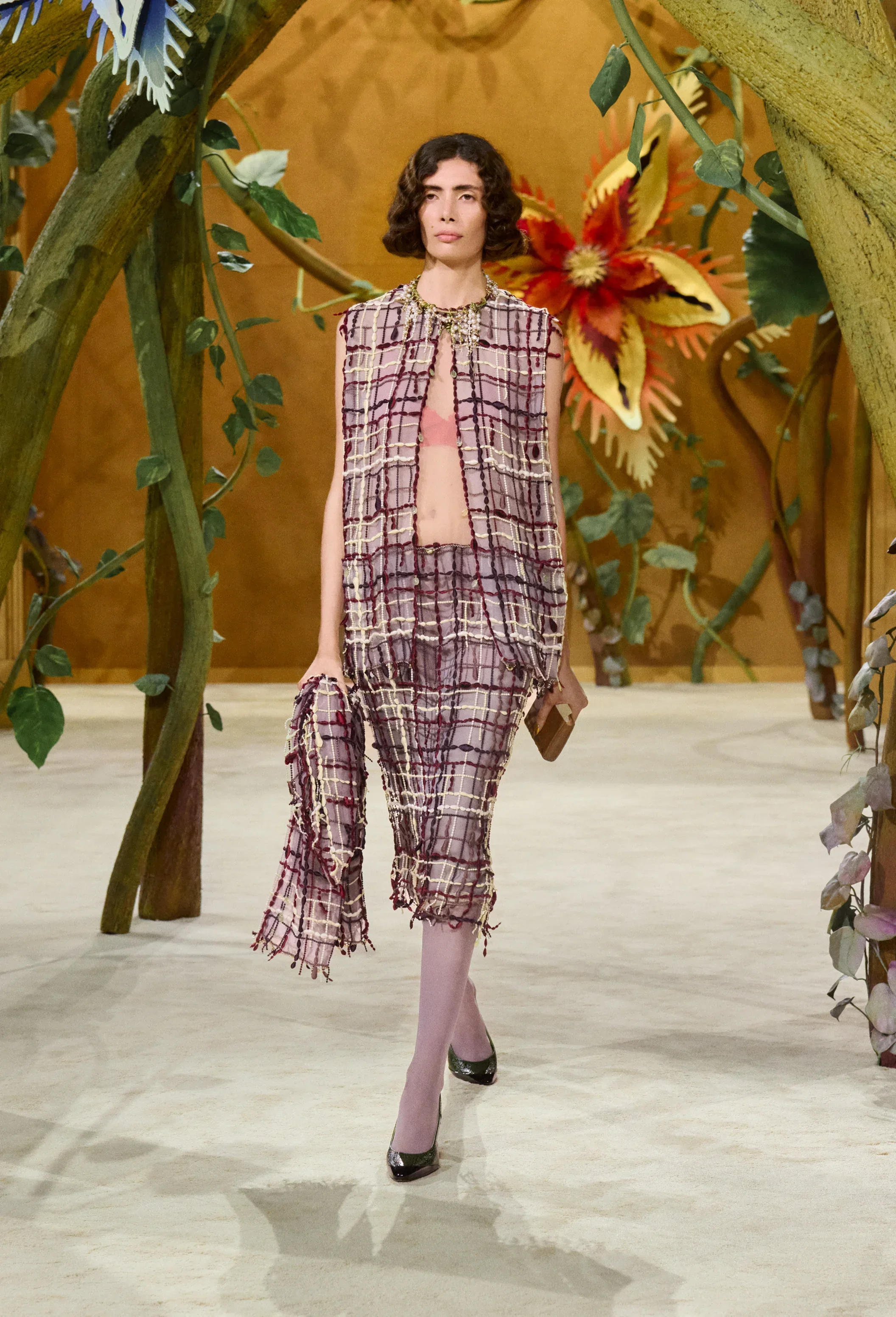
The ensemble established the dialogue between heritage and metamorphosis. Its boxy jacket and knee-skimming skirt retained the unmistakable architecture of Gabrielle’s original 1950s design, but the sheer weave and intricate organic embroidery gave it an ethereal, weightless temperament. Tendril-like threads and woven knots nodded directly to magic beans climbing toward the light.
Rather than discarding Chanel’s signature tailoring, Blazy treated it as an open canvas. The opening look demonstrated that heritage need not remain static or rigid; it can be entirely reinvigorated through subtle adjustments to transparency, texture, movement, and material nuance.
Inside the Craftsmanship: The Details That Made the Magic
While the collection projected an enchanting narrative from afar, its true wizardry resided in the meticulous artisanal labor executed by the house’s specialized ateliers and the master craftsmen housed at le19M. Every piece demanded dual competency: advancing the fairy-tale narrative while upholding the rigorous structural standards of haute couture.
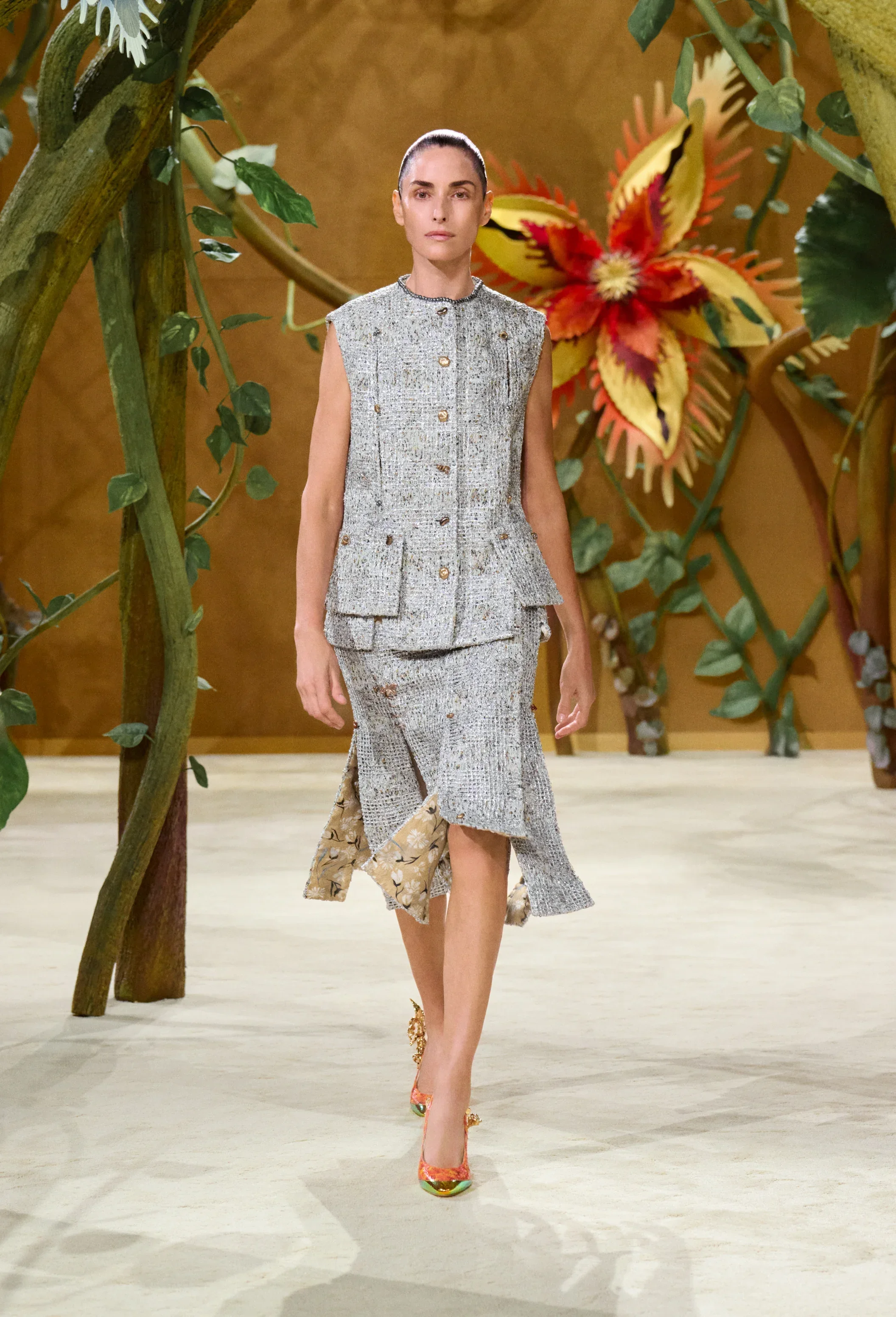
In one of the show’s most ingenious textile sleights of hand, Lesage wove a dense blue tweed engineered to look remarkably like distressed denim. Trimmed with yellow feather braid and secured by five jeweled buttons illustrating the stages of a sunflower—from seed to sprouting bud to full bloom—the silhouette channeled the Scarecrow from The Wonderful Wizard of Oz.
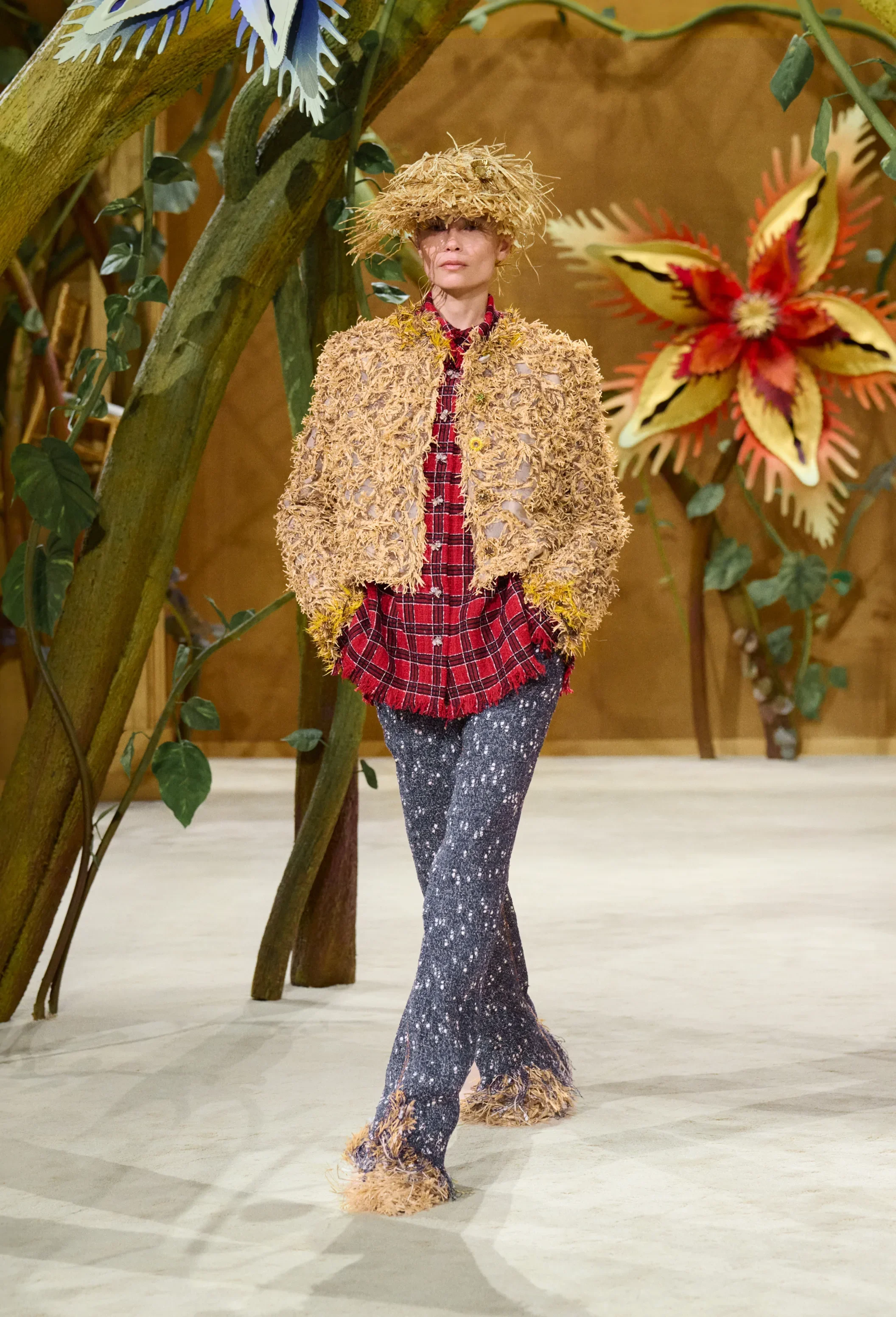
In another clever material illusion, raw raffia was crafted to resemble straw, reinforcing the storybook references without resorting to literal costume design. Natural botanical motifs also took center stage on a softly pleated wool cheesecloth skirt adorned with hand-embroidered strawberries and Chinese lanterns (physalis).
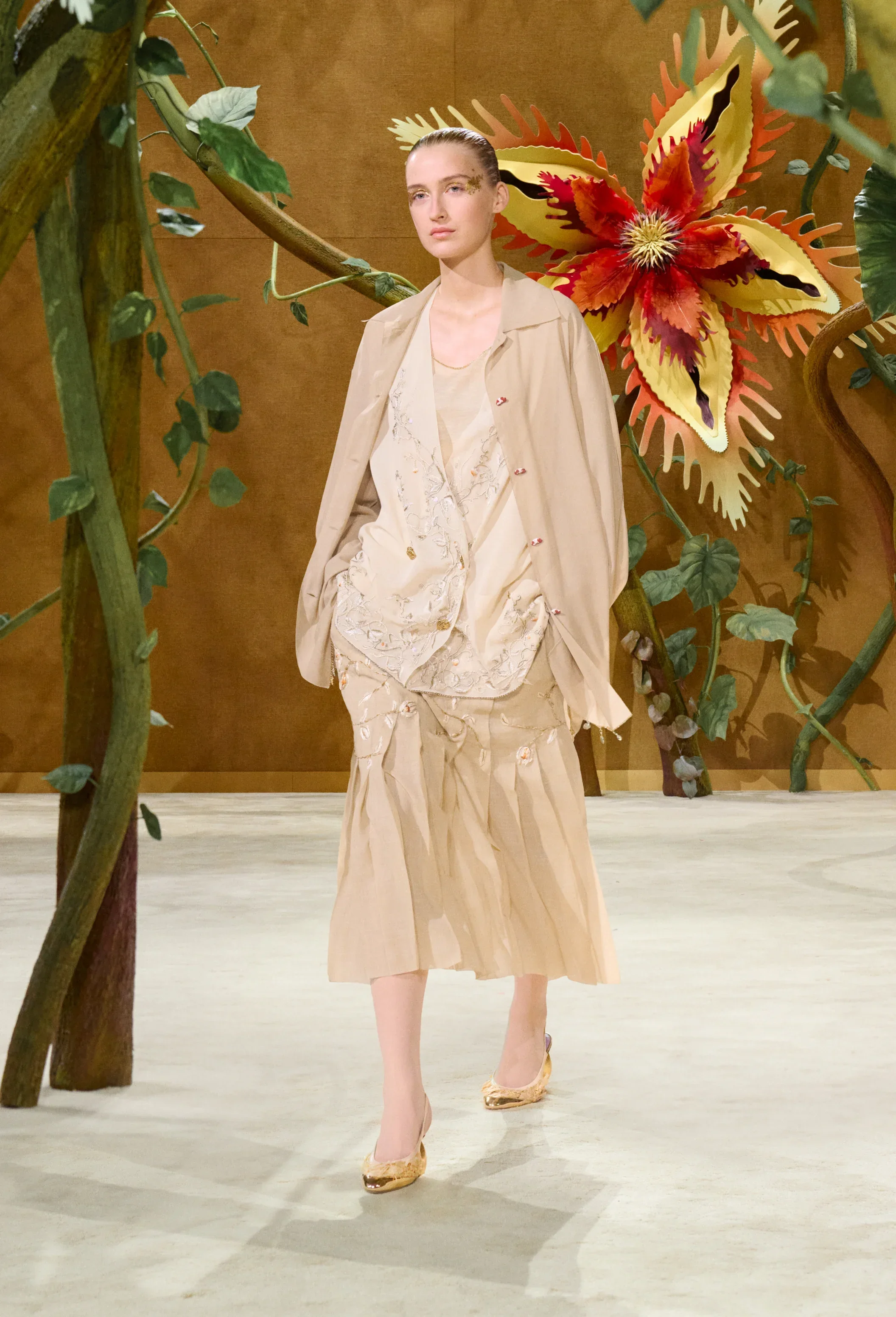
Worked against an earthy palette of camel, oat, and warm beige, the handwork by Lesage brought organic motifs to life. The low-slung waist and hands-in-pockets styling kept the silhouette effortlessly relaxed and contemporary. Throughout the collection, seed pearls, delicate feather trims, and micro-embroidery crept across lapels, giving the optical illusion that the garden was gradually spreading from the runway into the clothes themselves.
The Best-Kept Secret: What Was Hidden Inside the Clothes?
Perhaps the most poetic dimension of Blazy’s couture was what remained strictly invisible to the runway audience.
Inside tailored jackets and coat linings, Blazy concealed hand-painted silk landscapes, private initials, lucky charms, and embroidered memo notes. Some trinkets were tucked into interior pocket folds; others hung quietly from the gilded weighting chains that traditionally give Chanel jackets their impeccable drape.
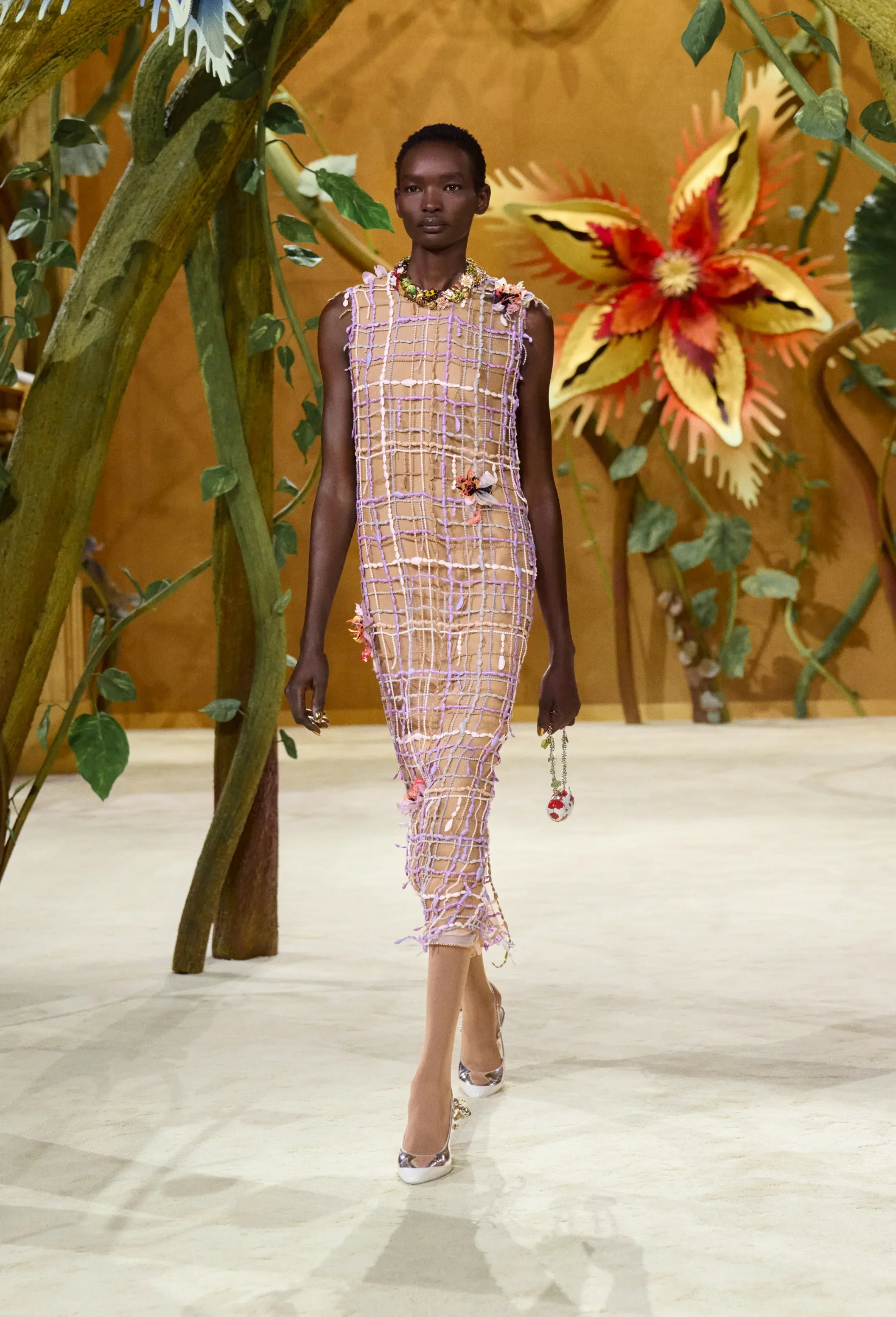
One especially wry detail involved embroidered fragments of ordinary daily routines: handwritten to-do lists, shopping reminders, and calendar jottings sewn into inner silk linings. Transforming mundane remnants of everyday life into couture treasures was Blazy’s quiet philosophical rebellion against performative excess.
“Luxury does not always need to scream for outside validation. The most profound luxury can be a private joke, an intimate memory, or a hidden secret known only to the woman wearing the garment.”
Blazy also invoked the archetype of the magpie—the bird famed for gathering shiny curiosities. Charms and keepsakes were tucked into pockets, occasionally migrating outward as decorative brooches or cuff embellishments, mirroring the way personal memories organically accumulate and shape individual style over time.
A Fairy Tale About Real Women
For all its whimsical storybook allegories, Blazy’s runway never lost sight of the woman at the center of the clothes.
The designer repeatedly stressed that the emotional core of fashion is rooted in the ordinary adventure of the day: waking up, dressing, reaching into a wardrobe, dropping children off, navigating work meetings, and transitioning into evening gatherings. That perspective explained the deliberate presence of practical coats, tailored separates, and restrained eveningwear alongside fantastical accessories.
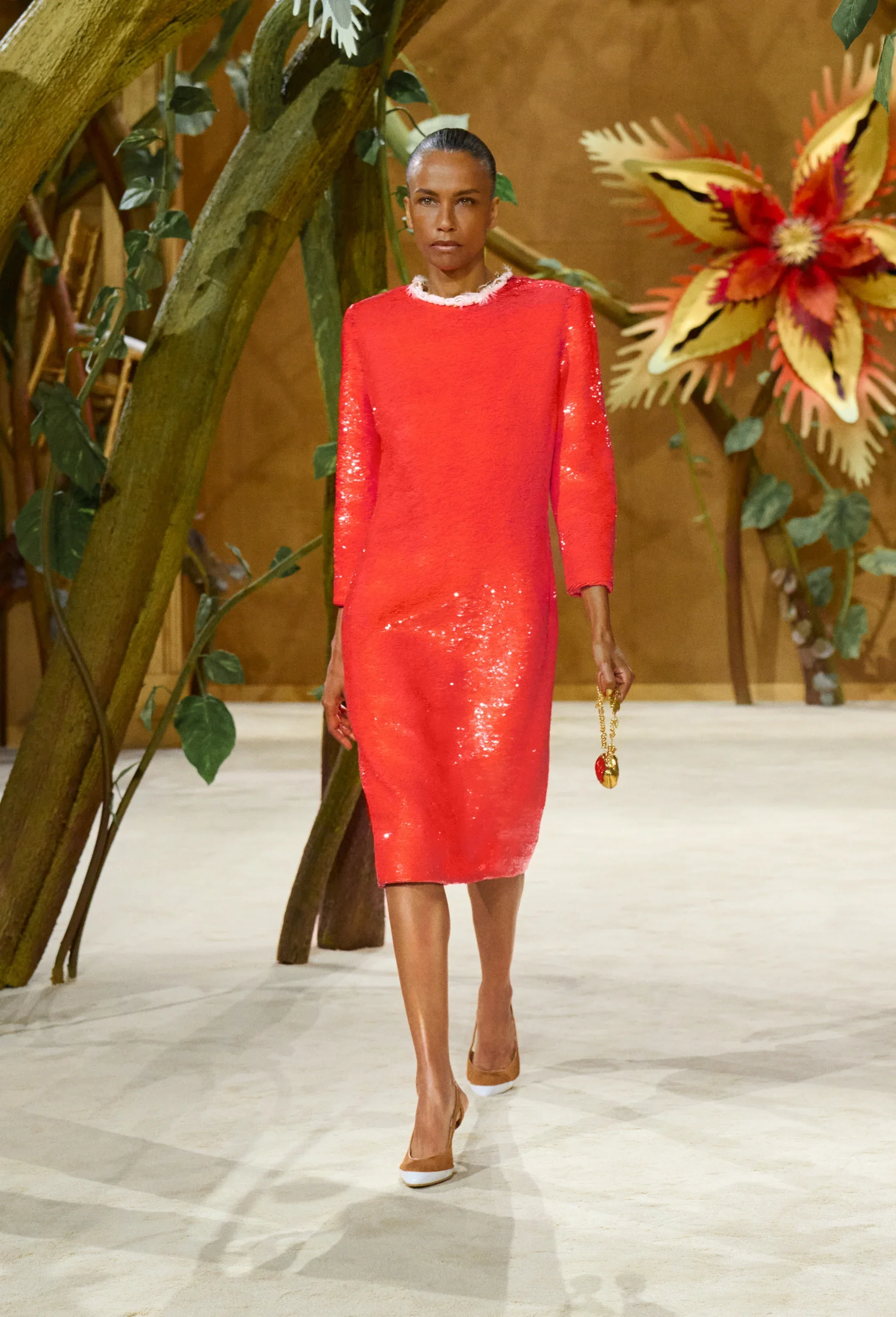
The runway casting powerfully echoed this philosophy. Rather than relying solely on teenage runway prodigies, Blazy cast women across generations—most notably model Stephanie, who celebrated her 50th birthday on the runway in Look 14, wearing a knee-length, vibrant red sequined dress. The moment was an exhilarating celebration of mature elegance, delivering genuine joy in an industry often trapped in youth-obsessed tropes.
Backstage, Blazy noted how the intergenerational dialogue between the models—seasoned icons mentoring younger women—imbued the show with warmth, making couture feel less like an alien fantasy and more like an intimate companion through life’s evolving milestones.
Backstage Notes: Why Imperfection Was Part of the Design
One of Blazy’s boldest conceptual moves was embracing the visibly unfinished.
Along several hemlines and collar bands, raw threads were left deliberately frayed. Other garments bore slashes, unstitched pleats, or reconfigured panels. Far from sloppy execution, these details were an affectionate homage to Gabrielle Chanel’s legendary fitting methodology: pinning, unpicking, slashing, and re-draping fabric directly onto the living model until the cloth moved naturally with the body.
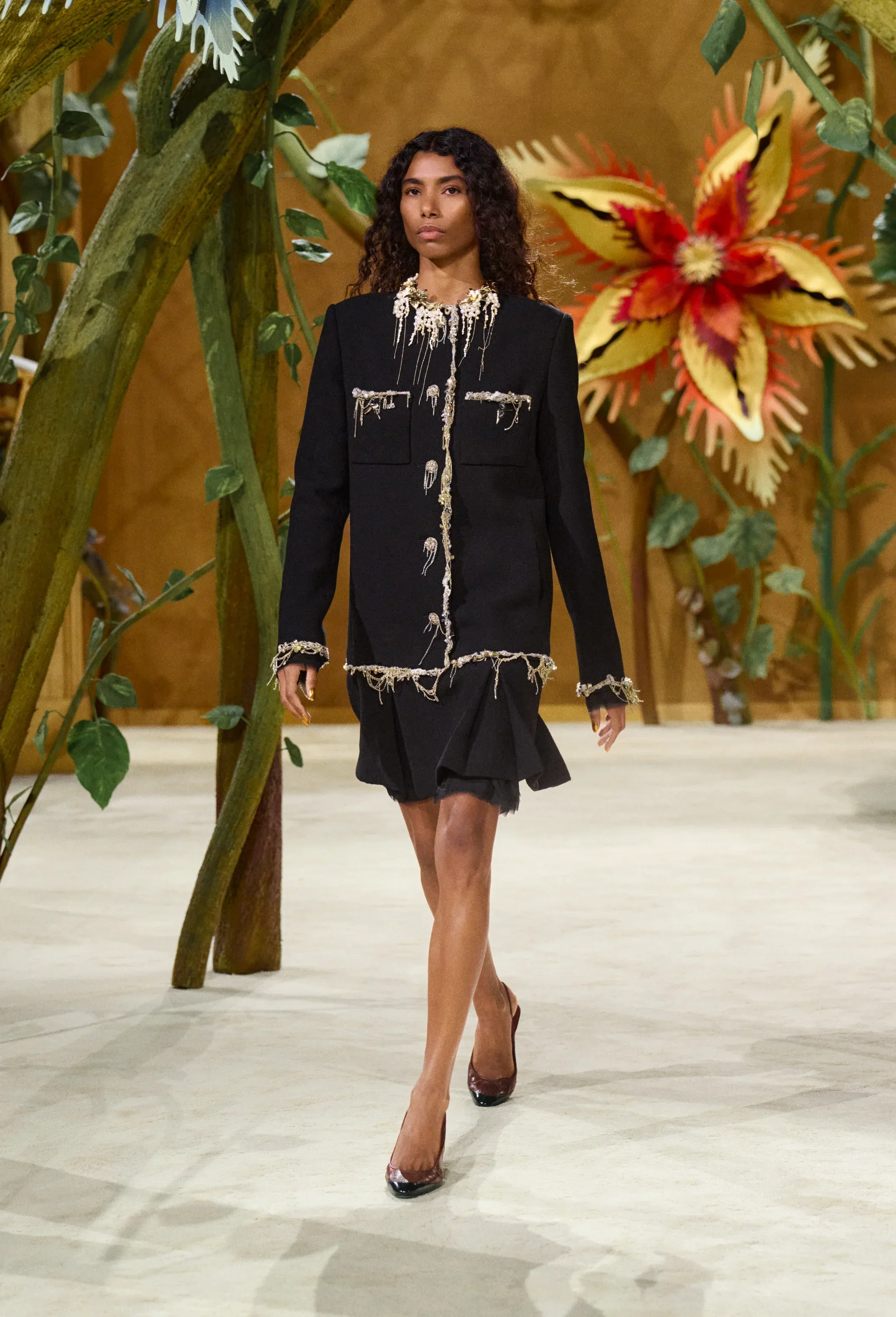
By allowing the seams to breathe and fray, Blazy revealed the human hand behind the machine. In his hands, a frayed edge became testament to the creative process, a seam suggested kinetic freedom, and an unexpected cut released the silhouette rather than constraining it. Couture’s technical perfection was redefined not by rigid immaculacy, but by effortless vitality.
The Runway’s Most Memorable Fashion Moments
Across the 63 looks presented, several pivotal silhouettes distilled Blazy’s thesis with remarkable clarity:
The sheer suit of Look 1 established the opening declaration of freedom, carrying Gabrielle’s fairy-tale volume into modern daylight. The Scarecrow jacket of Look 15 demonstrated how denim-look tweed, straw raffia, and five sunflower buttons could turn tailoring into storytelling. Look 25’s wool cheesecloth botanical skirt proved that the simplest natural fruits could be elevated to couture through painstaking embroidery.
Equally striking was Look 14’s festive red sequins, which proved that glamour at 50 can be effervescent without feeling precious. But perhaps the most quietly confident silhouette was Look 42: a long, razor-sharp black tunic worn over fluid, pooling trousers.
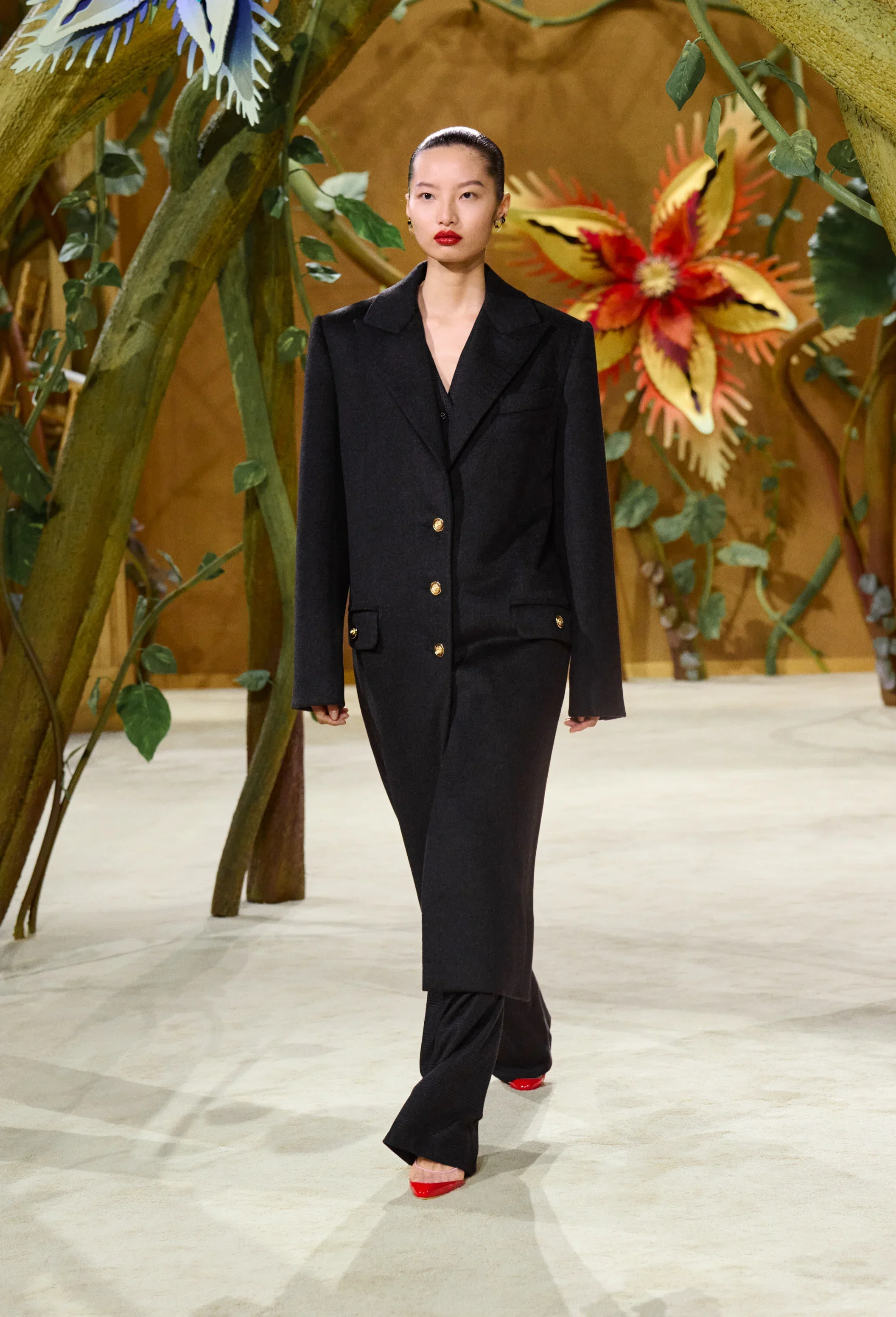
The effect of the tunic and trousers was revelatory: a reminder that red-carpet presence does not require ballooning volume, tight corsetry, or a dramatic train. Together, these pieces illustrated the range of Blazy’s vision—he made garments whimsical without making them childish, elaborate without making them cumbersome, and simple without making them ordinary.
The Celebrity Front Row: A Meeting of Fashion and Culture
The front row at the Grand Palais gathered an eclectic, culturally expansive cross-section of global talent, bridging cinema, music, literature, and elite athletics.
Among the seated guests were cinematic powerhouses Tilda Swinton, Michelle Yeoh, and French cinema legend Catherine Deneuve, joined by Lupita Nyong’o, Pedro Pascal, longtime house ambassador Vanessa Paradis, Teyana Taylor, breakout talent Sarah Pidgeon, and theater star Cole Escola. World-class athletes—including Olympic boxing champion Imane Khelif and British track star Dina Asher-Smith—added a dynamic, contemporary energy to the salon.
Their presence complemented the collection’s emphasis on individuality. Rather than suggesting that there is only one singular way to embody Chanel, the gathering celebrated individuals with wildly distinct creative aesthetics and public identities.
The front row also underscored the symbiotic relationship between couture and contemporary celebrity culture. While a runway presentation articulates the designer’s purest vision, the guests offer a living glimpse of how those clothes might translate beyond the catwalk. Yet throughout the evening, the clothes themselves remained the focal point—telling stories about women rather than courting ephemeral digital buzz.
The Finale: A Little Black Dress With a Message
In the ritualized theater of Parisian haute couture, the presentation of the bridal look (la mariée) is the universally anticipated climax. Chanel’s runway brides have historically anchored fashion lore.
Blazy, however, executed a profound subversion.
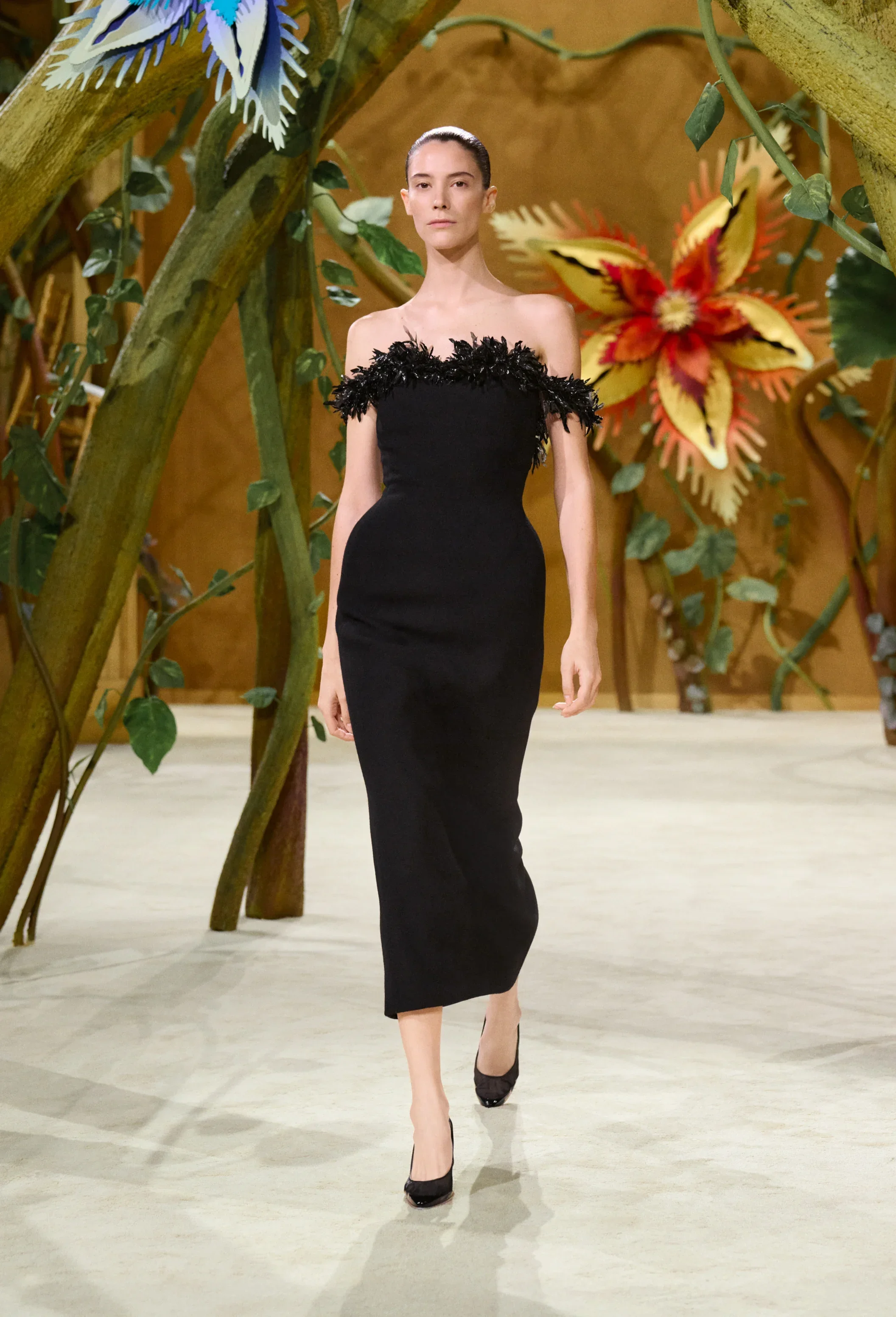
Following the bridal gown, the show did not fade into applause. Instead, Look 63 stepped onto the runway: a sleek, sculpted, black off-the-shoulder column dress. Its unadorned precision stood in stark contrast to the surrounding floral theatricality.
Blazy described this closing look as a couture “revenge dress,” emphasizing its poetic historical resonance: Gabrielle Chanel never married. Rather than concluding with an inescapable narrative of matrimonial closure, Blazy chose to celebrate the fiercely independent woman who founded the house.
The gesture expanded the horizons of the modern fairy tale. A woman’s story does not require a wedding ring to reach completion; she possesses the power to author her own ending. Returning to the little black dress—Chanel’s greatest democratizing gift to fashion history—brought the narrative arc full circle, stripped of distraction: confident, fluid, and utterly self-possessed.
What Matthieu Blazy’s Second Couture Collection Says About Chanel’s Future
This Fall/Winter 2026 collection offers a compelling roadmap for Blazy’s tenure at Chanel.
He is neither reverently embalming the archive nor recklessly discarding its foundational grammar. Instead, he treats Chanel’s historic vocabulary as an active, living language—one that welcomes denim illusions, raffia straw, raw hems, and embroidered secrets alongside the sacred camellia and chain-weighted tweed.
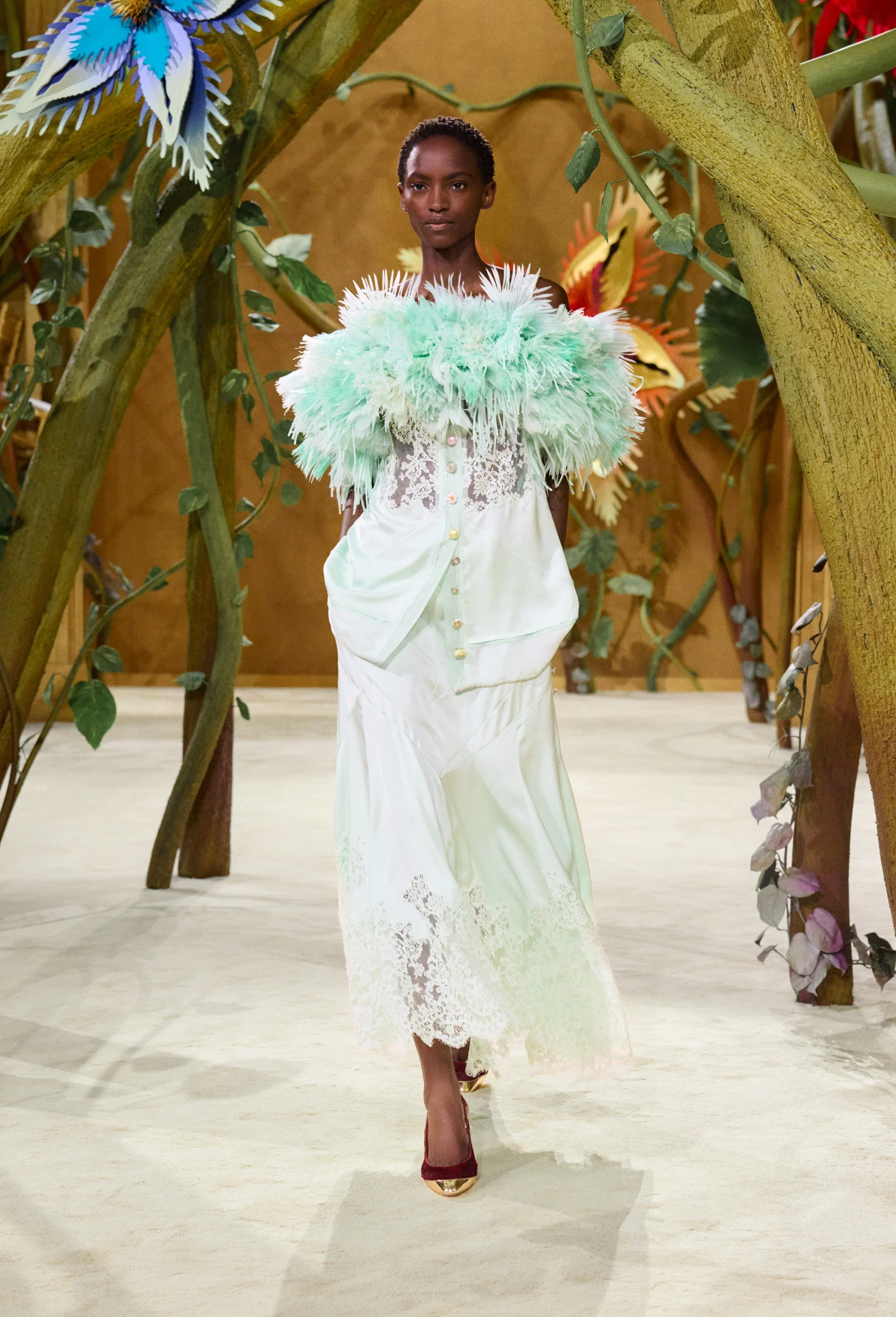
Crucially, Blazy’s couture bridges the chasm between fantasy and utility. Couture can continue to dream, but it must never forget the woman walking out the door. That ethos gives Gaby and the Beanstalk a resonance far beyond Paris couture salons. It suggests that personal style reaches its highest expression when imagination is anchored in lived authenticity.
Have a look you’d like to see featured on GlamCoCo?
Celebrities, stylists, artists, and brands can submit looks directly to our editorial team for consideration.



Related Looks

Jennifer Lawrence Defied Classic Couture Week Dress Codes In A White Tank Top And Jeans
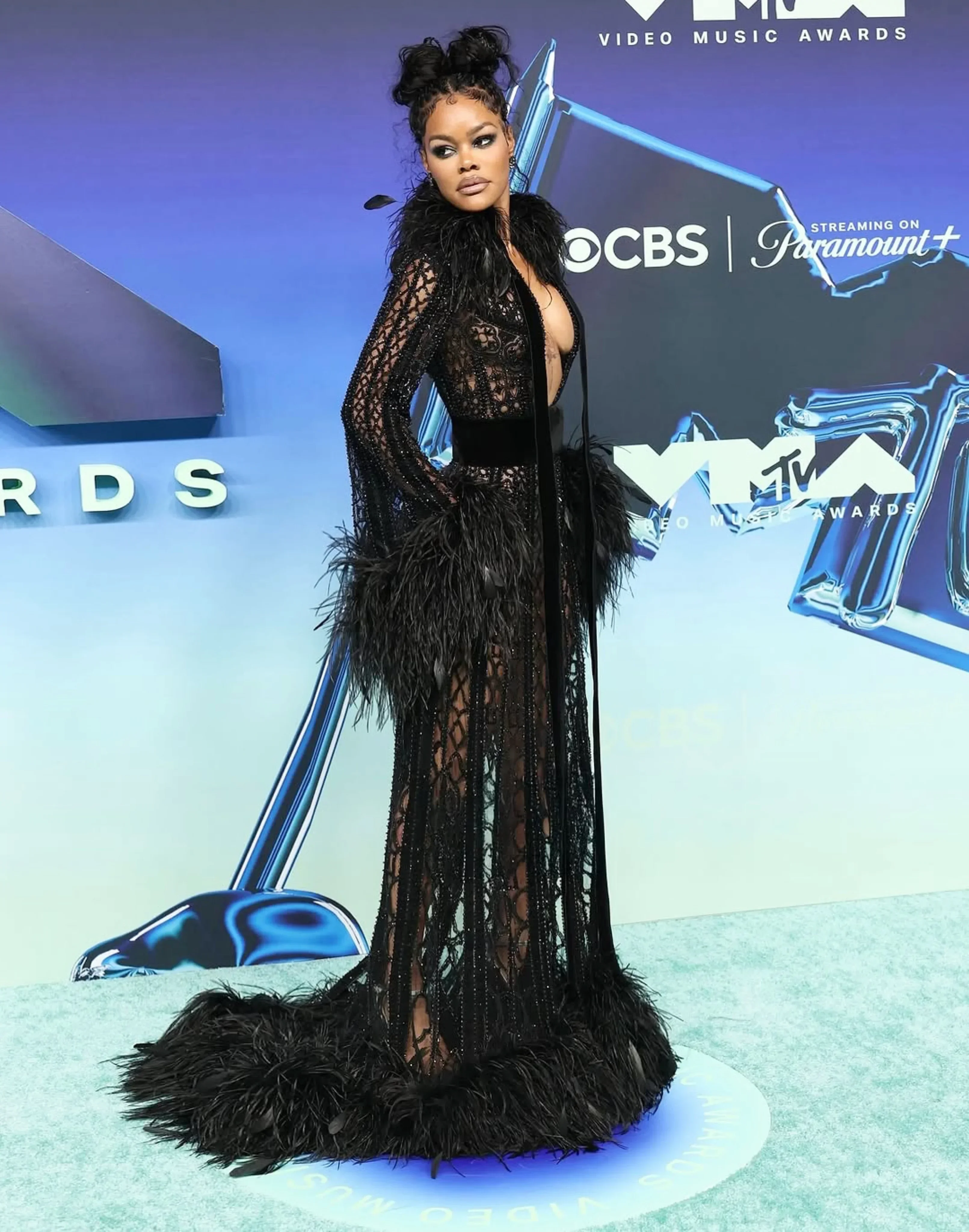
Teyana Taylor Owns Gothic Glamour in a Dramatic Sheer Look at the 2026 MTV VMAs

Anne Hathaway in Oscar de la Renta at the 'Modern Love' New York Premiere

Inside Jessie Buckley's Oscars 2026 Glam: A Study in Modern Old Hollywood
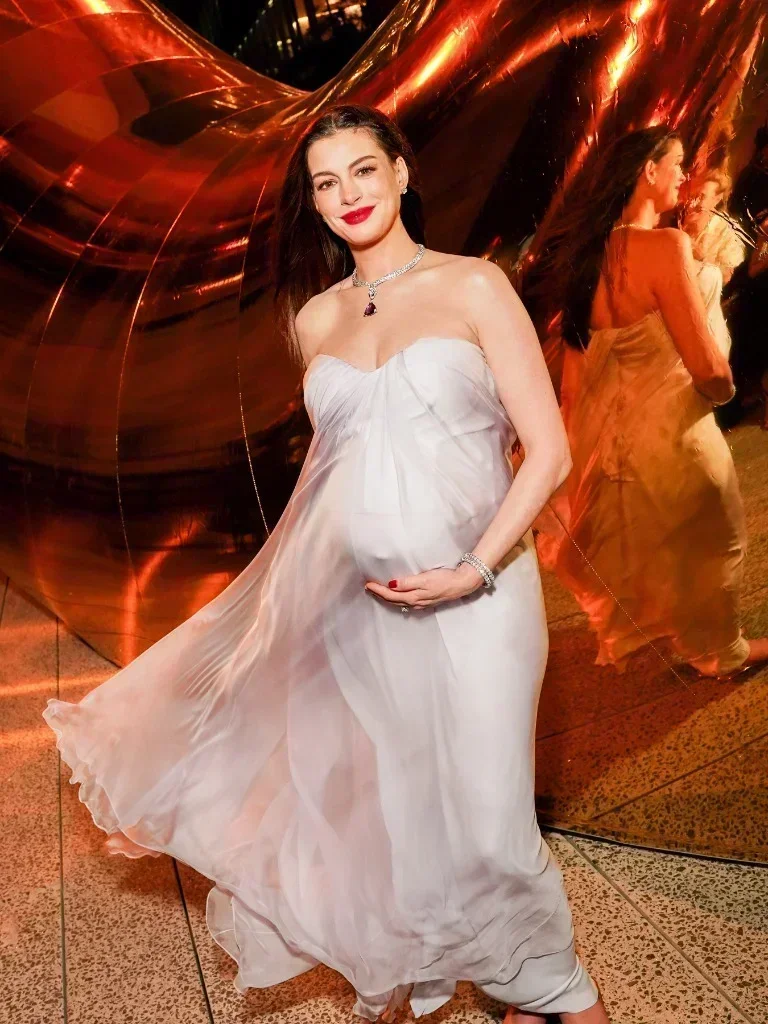
Anne Hathaway Shimmers in Lilac Alexander McQueen at Bvlgari Serpenti Infinito Launch

Zendaya Embraces Soft Romance in an Ivory Tamara Ralph Gown at the Spider-Man: Brand New Day London Premiere

Selena Gomez's Ethereal White Mirror Palais Lace Slip Dress at the London Launch of Rare Beginnings

Gracie Abrams in Chanel at the 2026 Met Gala
Related Stories

Audrey Hepburn Isn’t a Role—It’s a Legacy Lily Collins Must Inherit

What We Can Learn From Barbara Palvin's Cannes Maternity Style

How to Recreate Selena Gomez's Timeless Bridal Old Hollywood Glamour

Inside the 2026 Met Gala Through Gracie Abrams’s Lens

Dior Fall/Winter 2026 by Jonathan Anderson: Pleasure Gardens, Peplum Drama, and the Gen Z Reset We’ve Been Waiting For

See All the Looks of Dior Cruise 2027: Jonathan Anderson's Cinematic Love Letter to Hollywood
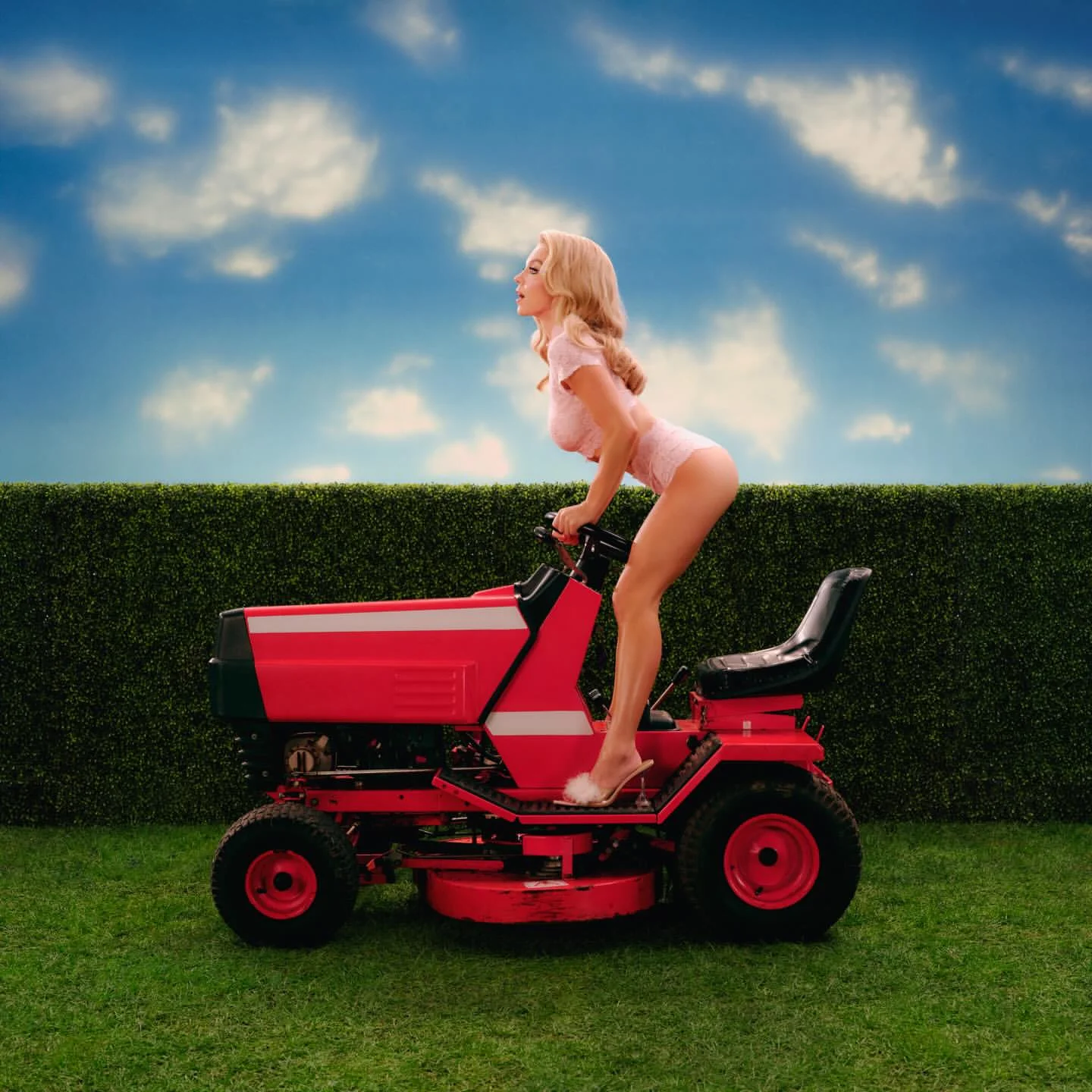
Sydney Sweeney’s SYRN Isn’t Just a Celebrity Lingerie Brand—It’s a Venture-Backed Bet on the Next Consumer Powerhouse
